After the Annuity: Managing the Effects of Pension Lift-Outs
May 2026
View available investments in your area

Sorry, we couldn't find any results matching
Please:

Annuity purchases are popular and effective ways for U.S. corporate pensions to derisk balance sheets through a pension risk transfer (PRT). The average corporate pension has been fully funded since 2022, and plans have taken advantage of their improved funded status and higher interest rates to engage in record levels of PRTs.
In this era of full funding, sponsors tend to have one of three goals: termination, hibernation or continuing to grow plan surplus.1 Retiree lift-outs, a type of PRT, can potentially help with all three, and many plan sponsors have already conducted one or more. In fact, while plan terminations account for most of the PRT transactions, because of their larger size, lift-outs account for the majority of PRT premiums.
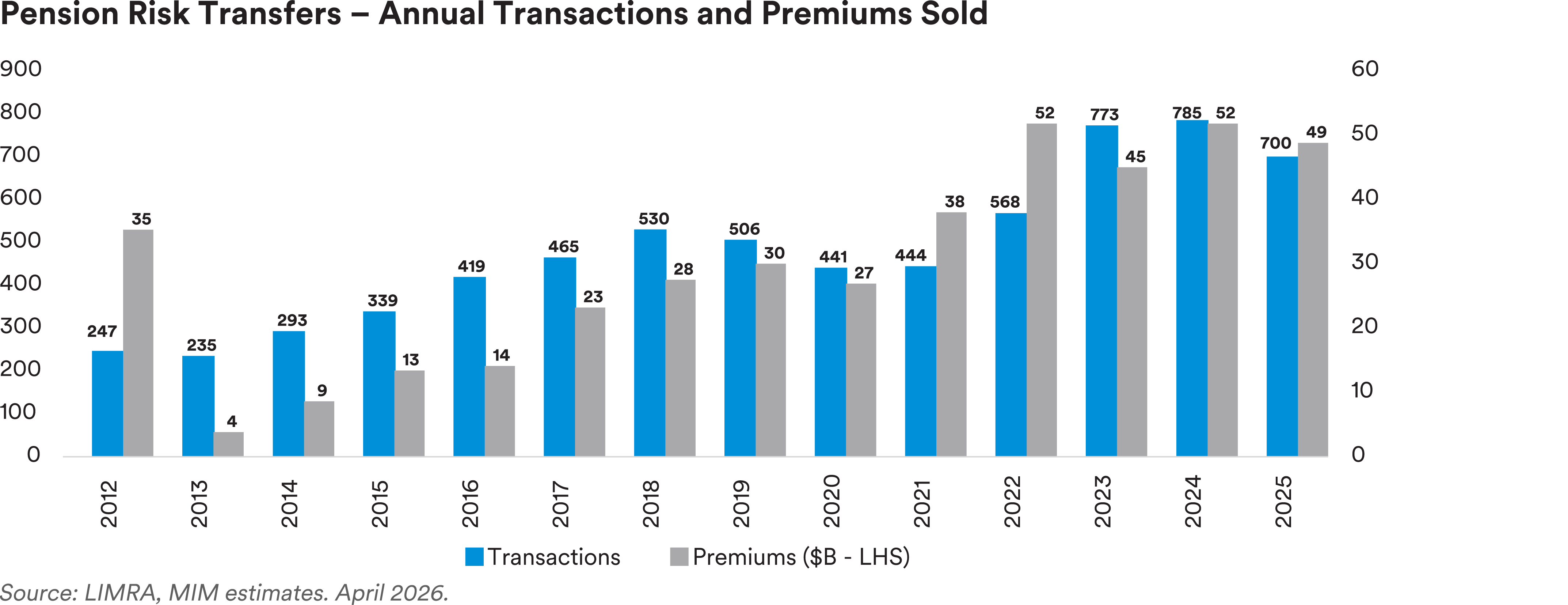
Lift-outs alter pension economics, accounting results and hedging effectiveness. Understanding the trade-offs can help manage these impacts.
When considering which participants to include in a lift-out, retirees with small benefits are usually at the top of the list. The inclusion of small annuitants, such as those receiving less than $180/month,2 are compelling because plans pay the PBGC an annual flat rate premium for each participant regardless of the value of their benefit. The 2026 premium is $111 and future premiums are indexed to national average wage growth.
The net effect of removing retirees with small pensions is an improvement in expected future funding level. Eliminating the flat rate PBGC premium for small annuitants tends to outweigh the potential investment upside on the assets used to fund the lift-out.
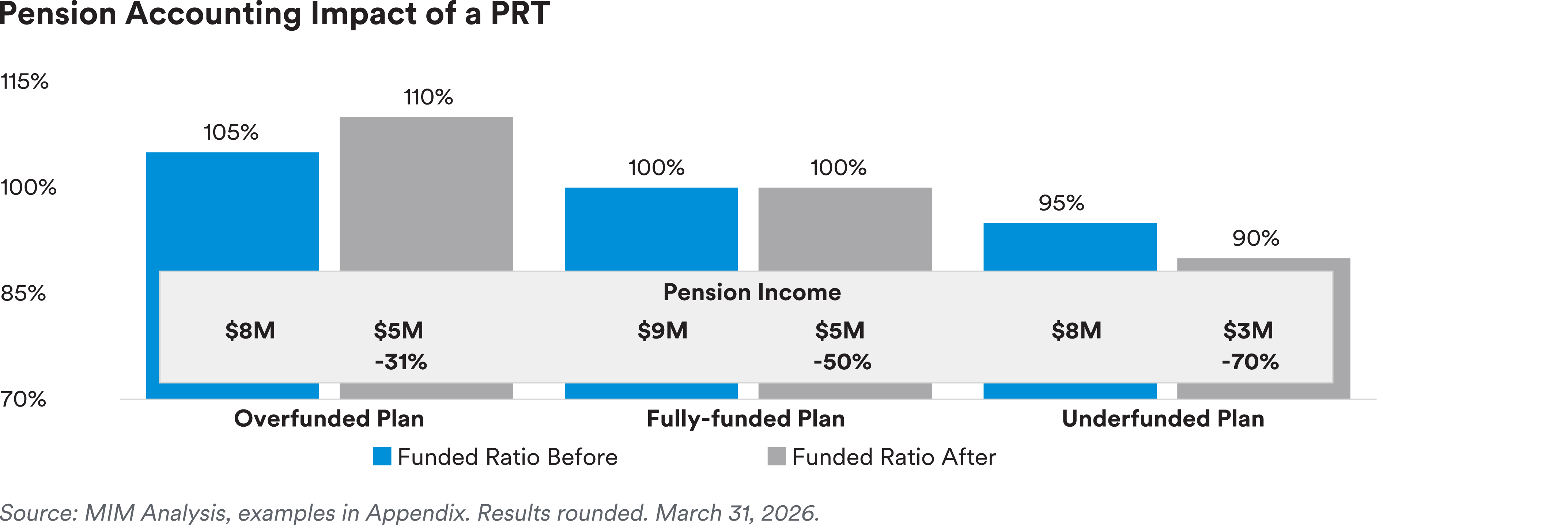
However, the accounting impact of a lift-out is negative. Pension accounting income is the difference between expected asset returns and expected liability growth. Most plans expect assets to grow faster than their liabilities. The average expected return on assets in 2026 is 6.44% and the average discount rate is 5.37%.3
For lift-outs, the premium paid is generally very close to the accounting liability. So, for accounting purposes, plan surplus or deficit is largely unchanged.4 Yet, because assets are assumed to grow faster than liabilities, lift-outs decrease pension income.
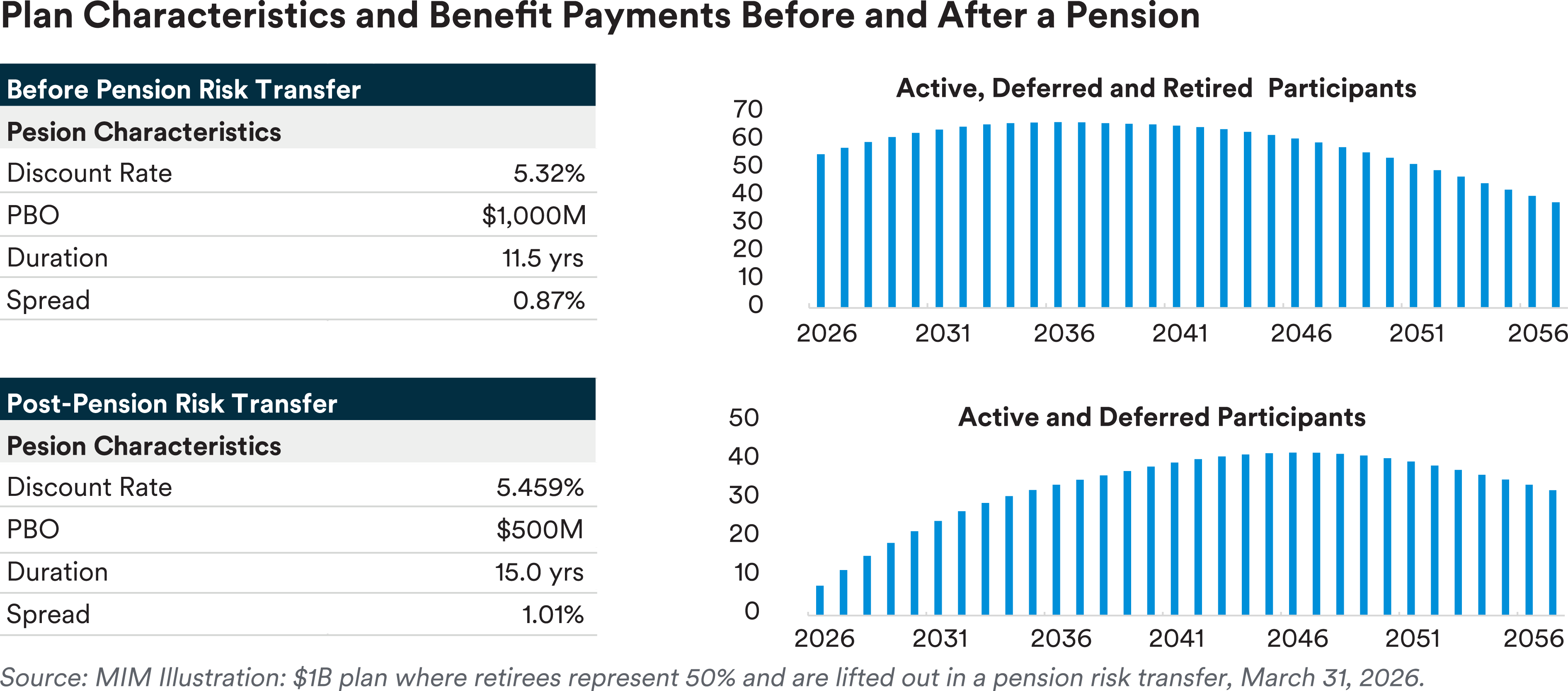
Lift-outs change pension liabilities in ways that make hedging more difficult. To show why, we created a model in which retirees represent half of the plan prior to the PRT and have an average duration of eight years. We assume all retirees are included in the lift-out and that the remaining participants have a duration of 15 years. The average duration for the plan is 11.5 years. (A typical lift-out may not include all retirees.)
After the lift-out, liabilities have a longer duration (15 years vs. 11.5 years), making the plan more sensitive to interest rate movements. Likewise, removing retirees shifts the liability cash flow profile toward longer maturities. This results in a higher liability discount rate spread (0.87 to 1.01%). Consequently, the plan’s remaining liabilities become more exposed to moves in both interest rates and credit spreads.
Pension plan sponsors can use liability-driven investing (LDI) assets to pay for a lift-out. These are referred to as asset-in-kind (AIK) purchases. AIKs provide insurers with liquid assets that may match well with the liabilities, reducing risk for the insurer.5
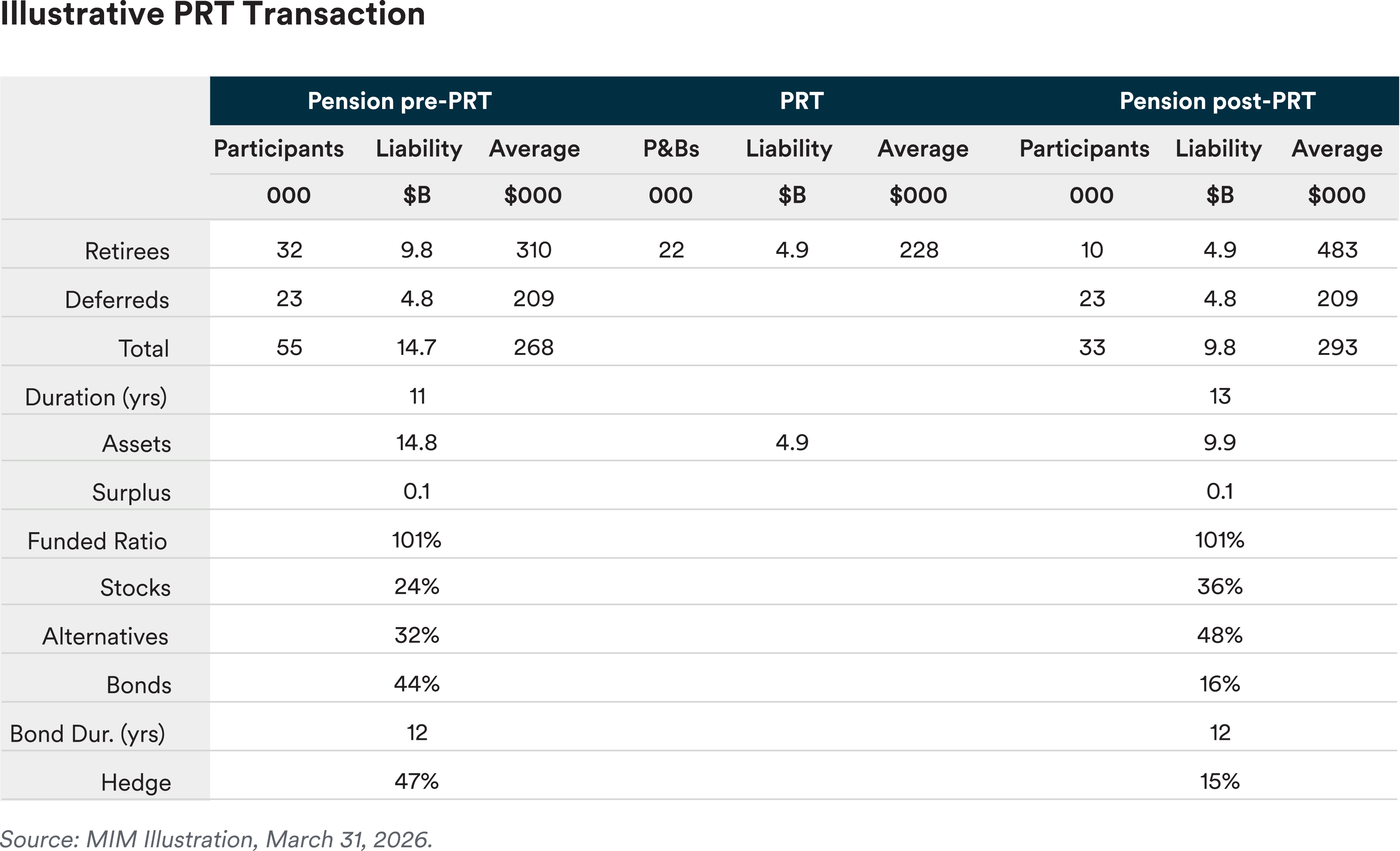
However, LDI assets are often long-duration bonds, which typically match retained pensions better than those in a retiree lift-out. If used in an AIK, the plan’s asset hedge is often reduced significantly.
Finally, when publicly traded bonds or other liquid assets are used to pay for retiree lift-outs, illiquid assets will represent a larger proportion of total plan assets and may exceed plan investment policy limits.
The example in the table below incorporates some elements of a recent jumbo PRT, a partial lift-out annuitizing retirees with smaller benefits. Our example assumes the transaction was funded with long-duration bonds. As the table shows, the plan’s allocation to alternatives increased, while the hedge ratio decreased.
Thoughtful planning can improve post-lift-out hedging. For example, other liquid assets like equities can be used instead of long-duration bonds. Using bonds that better match the retiree payout profile, like intermediate-duration bonds, might be beneficial to both the insurer and the plan. Finally, the annuity provider may be willing to accept some illiquid assets as part of the AIK. Hedging can also be managed after the lift-out, for example, with the use of an LDI overlay to help maintain the desired hedge.
We expect that the conditions that have supported historically high levels of PRTs will continue. Retiree lift-outs can benefit plan sponsors who want to eventually terminate a pension, hibernate the plan or grow pension surplus.
However, pension balance sheets look different after a lift-out. Lifting out retirees who receive small pensions, a common approach, improves future funded status. However, it also tends to reduce pension income and make remaining plan liabilities more vulnerable to interest rate and spread volatility. With an AIK, plan assets may become less effective hedges and less liquid.
Sponsors who anticipate and manage changes during a lift-out can address many of these issues. Effective plan management, modeling the included group appropriately and making informed choices about which assets to use in the purchase can potentially reduce volatility and optimize plan economics.
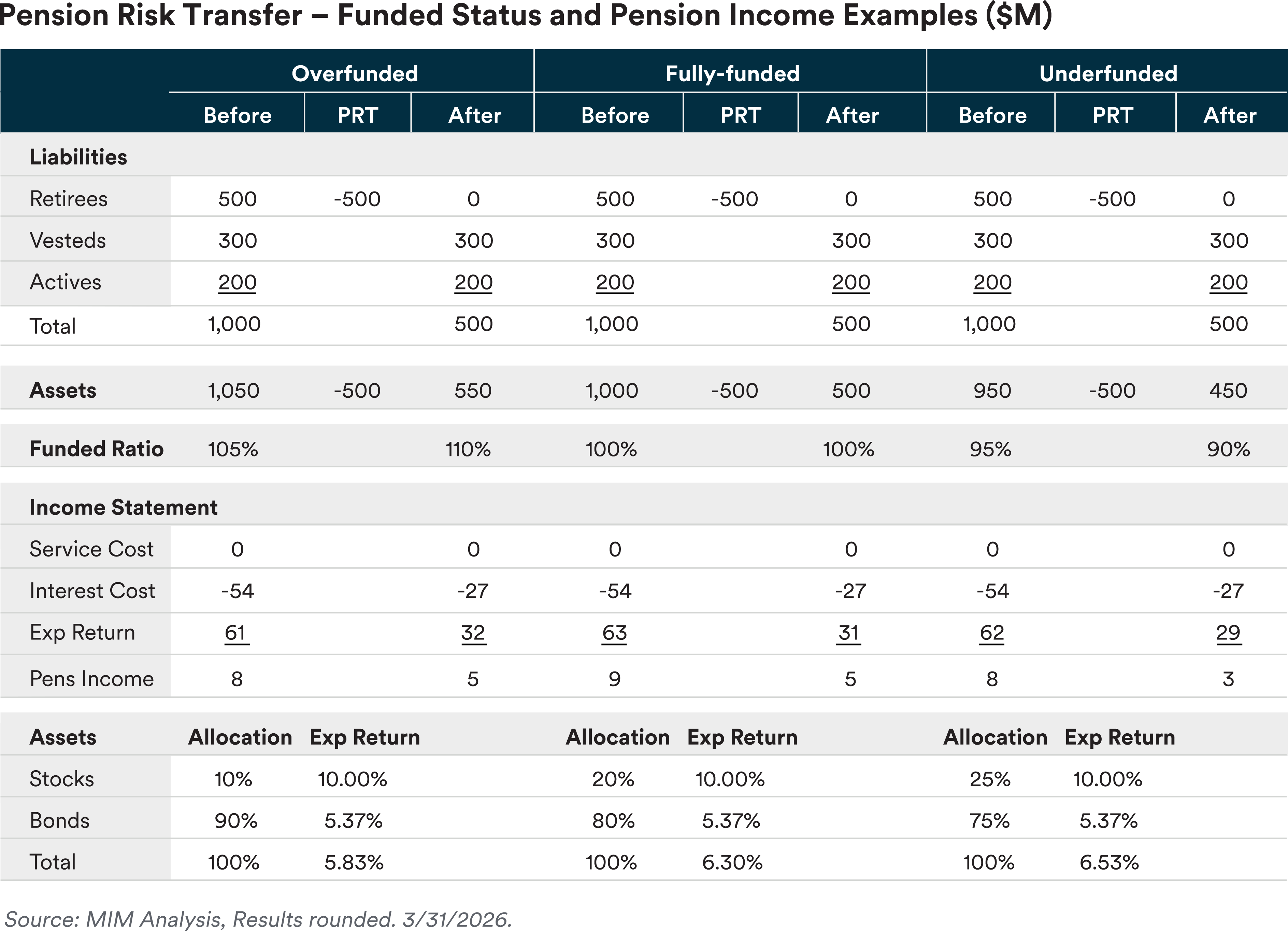
Our illustrative plans are hypothetical, have $1 billion in liability, are frozen and have no unrecognized gain/loss. Each has a typical maturity, with retirees representing half of the plan. The PRT in each case annuitizes the retirees, and the PRT premium is equal to the balance sheet liability, i.e., 100% of projected benefit obligation (PBO). Asset allocation is less risky for higher funded status examples. The expected risk premium is 463 basis points.
Plan specifics may cause different results. For example, exceptions include plans where assets have a lower expected return than the discount rate, plans with large, unrecognized gains where shrinking the plan would accelerate recognition and transactions at a significant discount to PBO. These exceptions are believed to be rare.