Can AI Grow the U.S. Out of Debt?
Oct 26, 2026
View available investments in your area

Sorry, we couldn't find any results matching
Please:

Key takeaways
AI will likely have at least some positive effect on measured productivity growth, but we do not believe that the U.S. (or other countries) will be able to grow their way out of debt using an AI-driven productivity boost. AI growth will have to overcome the drag from demographics and a shrinking labor force, and structural fiscal challenges will continue to worsen. The chances of achieving the consistent high real growth required are low.
Consistent high growth is hard to achieve
The Committee for a Responsible Federal Budget estimates that the U.S. would need broad-based growth of 3.3% per year on average just to hold debt at 100% of GDP. To reduce deficits to 3% of GDP, the real growth rate would need to average 4.4% over ten years.
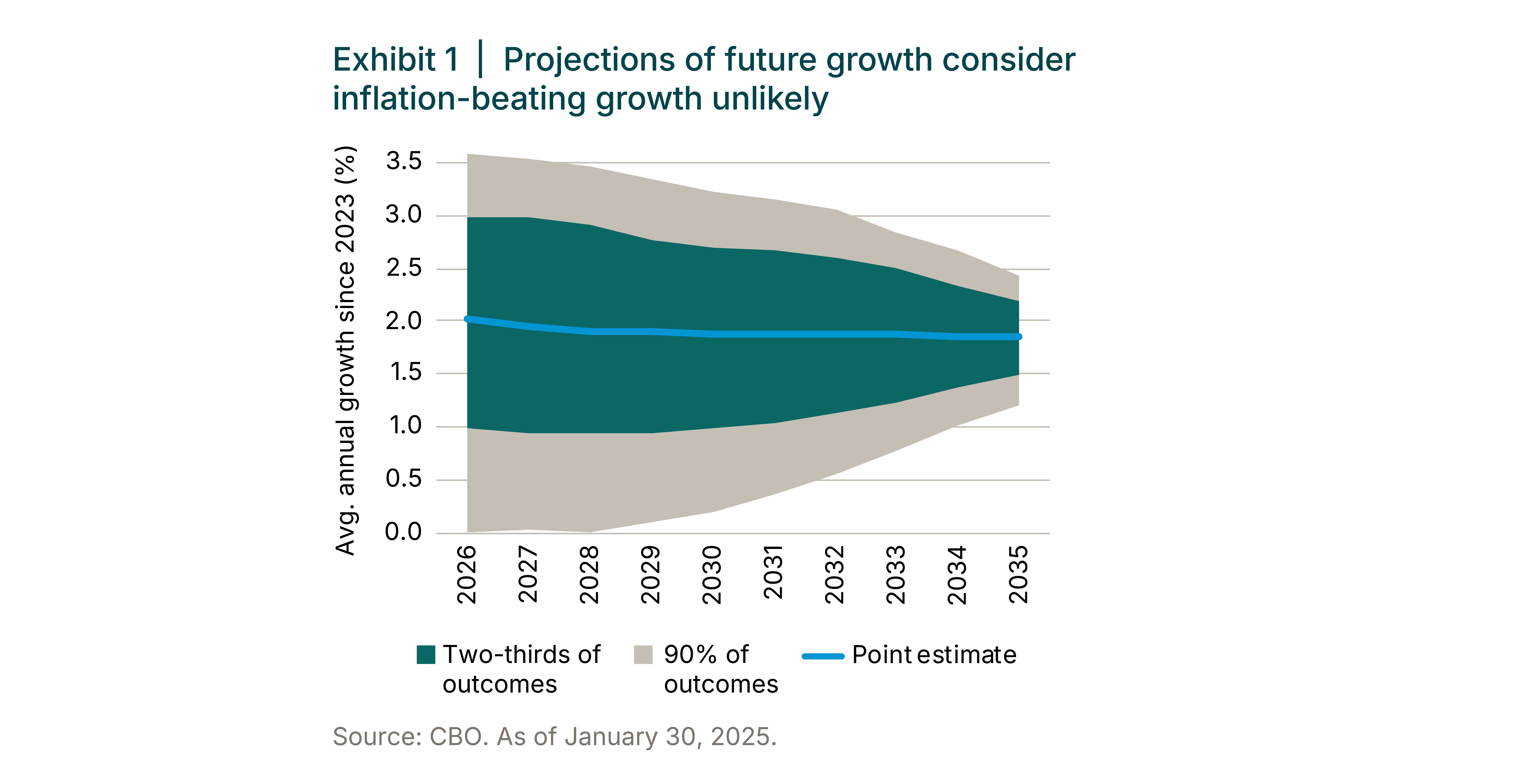
The Congressional Budget Office (CBO), in a 2025 analysis, estimates that the average annual growth from 2023-2035 would be 2.4% or higher in just 5% of simulated scenarios. The median estimate of average annual growth is 1.9%.
According to the CBO, achieving and sustaining real growth is a low-probability event.
What about AI boosting productivity?
AI productivity improvements could raise expected potential GDP for some time, but, as the forecast from the Congressional Budget Office shows, likely not indefinitely.
Productivity growth (and therefore potential GDP growth) has depended on and will continue to depend on a favorable policy environment. To date, AI development in the U.S. has benefited from access to global supply chains that eventually produced cutting edge chips, a large cluster of highly skilled researchers and technicians, and institutions that protect and encourage intellectual property.
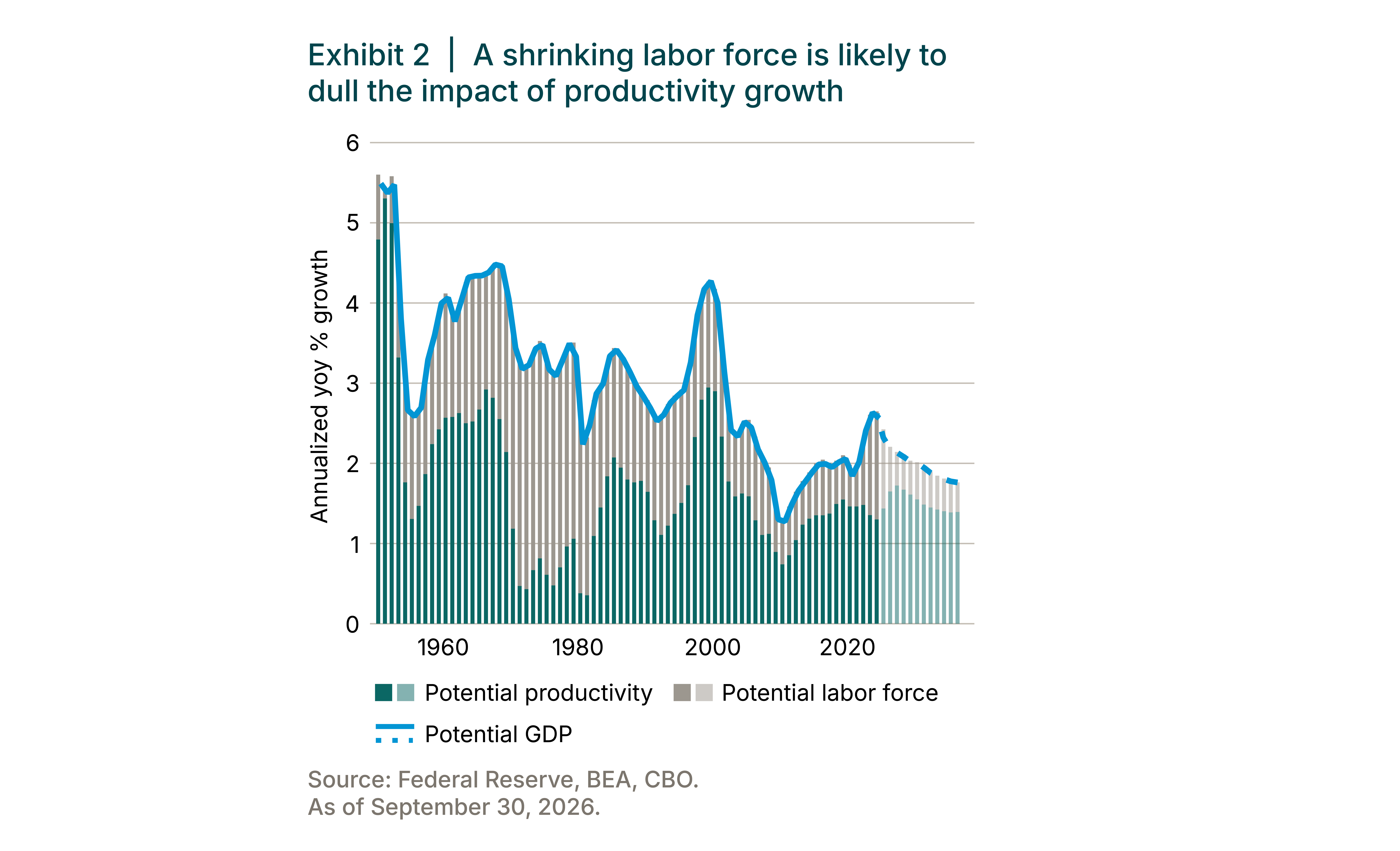
The magnitude and duration of the productivity boost would have to be unprecedented. As it stands, any boost to potential GDP growth from AI will have to offset (and eventually surpass) the drag from a shrinking labor force. Fiscal policy will also be an uphill battle and a moving target, given growing non-discretionary obligations and interest payments, as well as the lack of political will to tackle structural fiscal issues.
What about other economies?
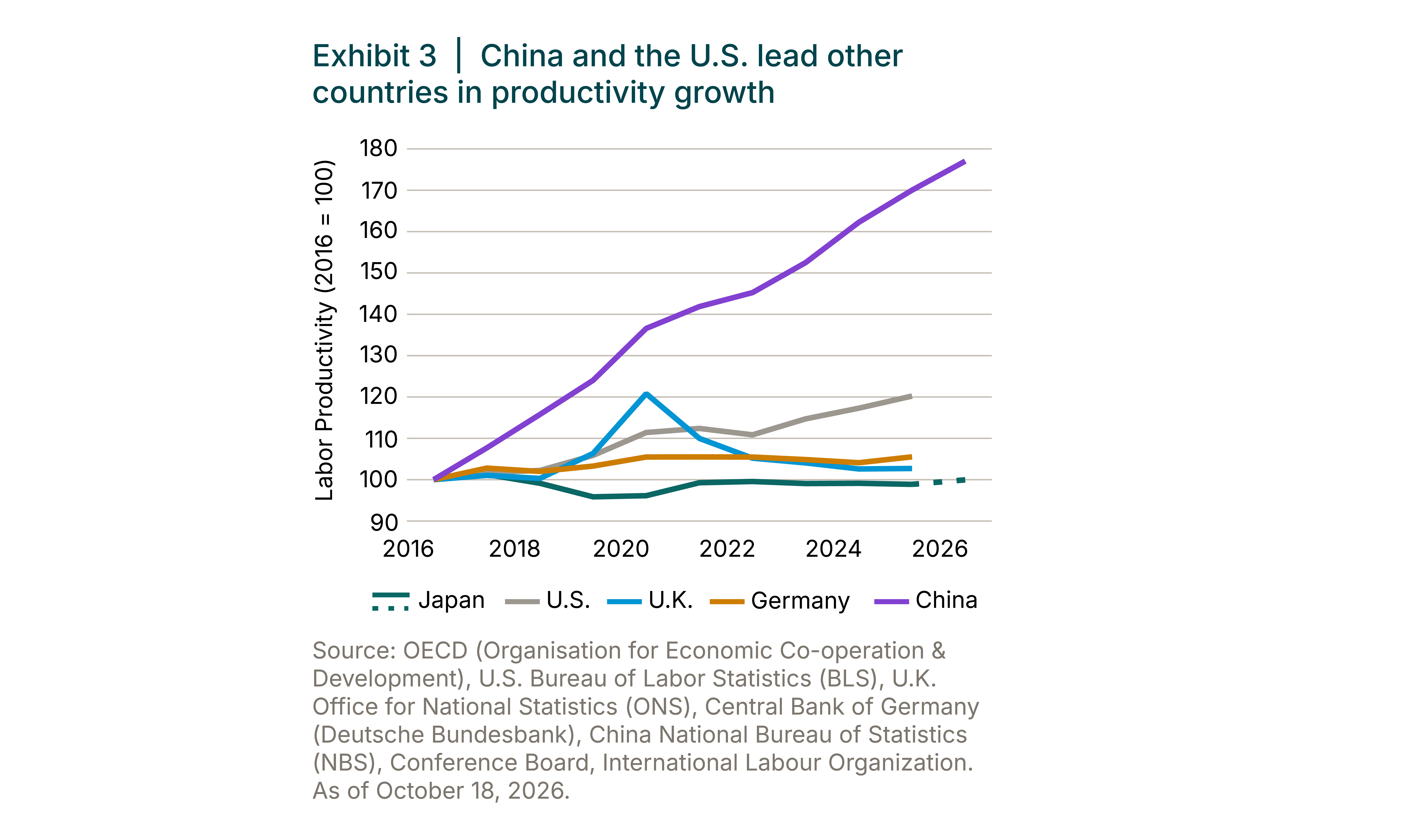
In the event it is possible to grow out of the debt (likely with the help of fiscal reform), we believe the only other large country that could approximately follow the path of the U.S. is China. Most other countries cannot grow as fast as the U.S. Productivity growth in Japan and Europe is much lower, and they also face their unique demographic, fiscal and investment challenges.
Interestingly, if there is any fiscal policy improvement in the U.S., it may help other countries’ indebtedness. While we do not believe other countries could grow their way out of debt, a fiscal improvement in the U.S. would likely lower yields globally, as most sovereign debt is still implicitly linked to U.S. Treasuries.
In any case, basing a deficit-reduction strategy on lofty and speculative expectations of a new technology is an uncertain strategy. The timing and level of productivity improvement are still uncertain.
Outlook
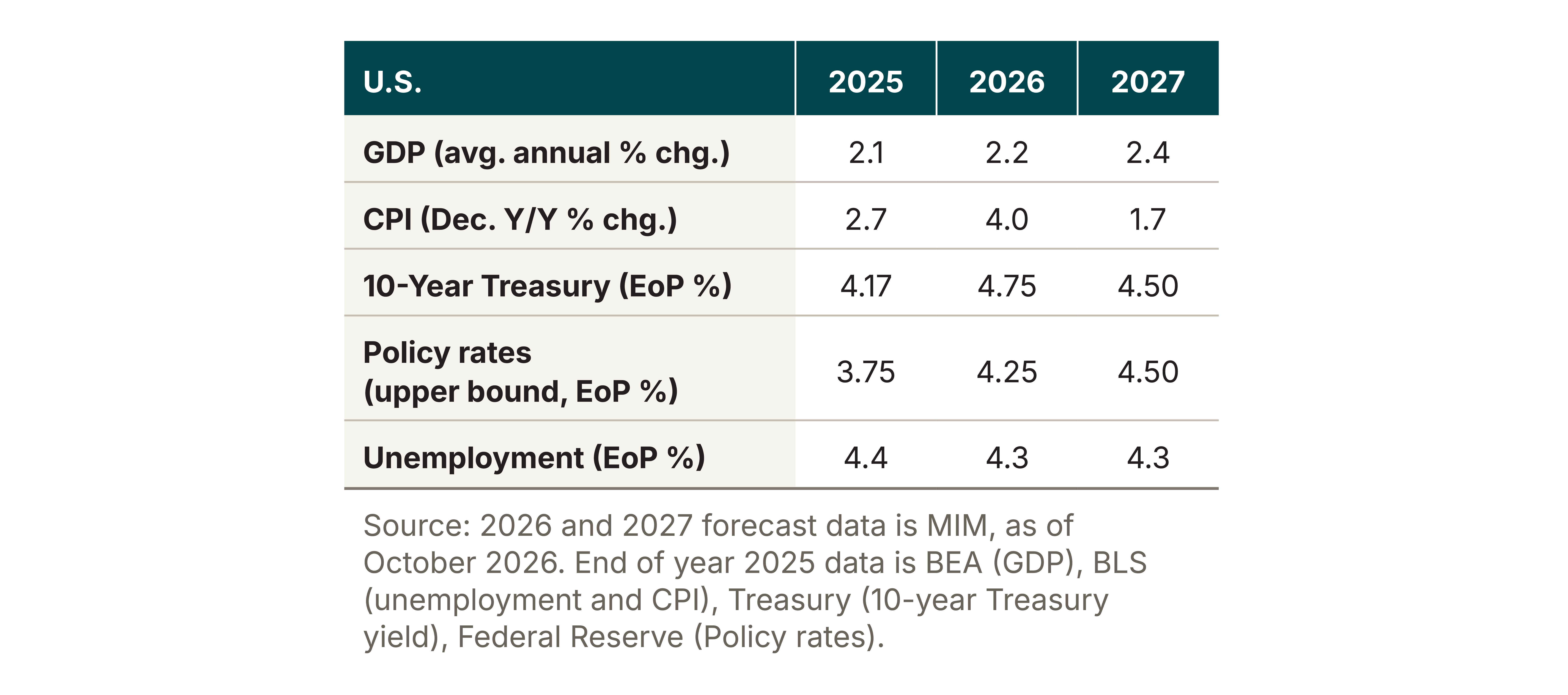
We have no change to our forecast this month. The Iran conflict continues, and we expect high headline inflation for 2026. Falling oil prices in 2027 should bring headline inflation down significantly, although the Iran conflict has gone on longer than expected.
In line with market expectations, we expect a hike in December of 2026 followed by another in Q1 2027. Yields will likely remain high as markets pay more attention to the fiscal situation of the U.S., combined with higher inflation and still relatively strong economic growth.
Risks
There are two main risks to our current outlook.
The Iran conflict continues to be a risk. September’s inflation data (CPI, PPI and import prices) all showed significant effects from higher energy prices. Retail sales data also showed consumers spending a lot more (nominally) on energy. Broadening of this inflation effect means the Fed might raise rates more than currently expected, pushing up both the policy rate and 10-year outlooks.
The AI boom is also seeing some threats to its growth over the last few quarters. Some of the growth may come back depending on the election outcomes in November, but popular pushback against AI continues, and there are rising concerns about the business models that support valuations as well as the level of borrowing.