Healthy Labor Market in the Face of AI
Sep 2026
View available investments in your area

Sorry, we couldn't find any results matching
Please:

Key takeaways
Despite high inflation, geopolitical and tariff risks, and weak hiring activity, the labor market remains surprisingly resilient. After struggling in 2025, the manufacturing sector has been posting healthy job gains in 2026. New college graduates may be having difficulty finding jobs due to less hiring (and maybe some effects from AI), but youth unemployment is also at historical lows. Declining labor force participation is driven by older workers leaving the workforce. There are shifting dynamics beneath the surface, but the labor market remains broadly stable.
Manufacturing employment continues to improve
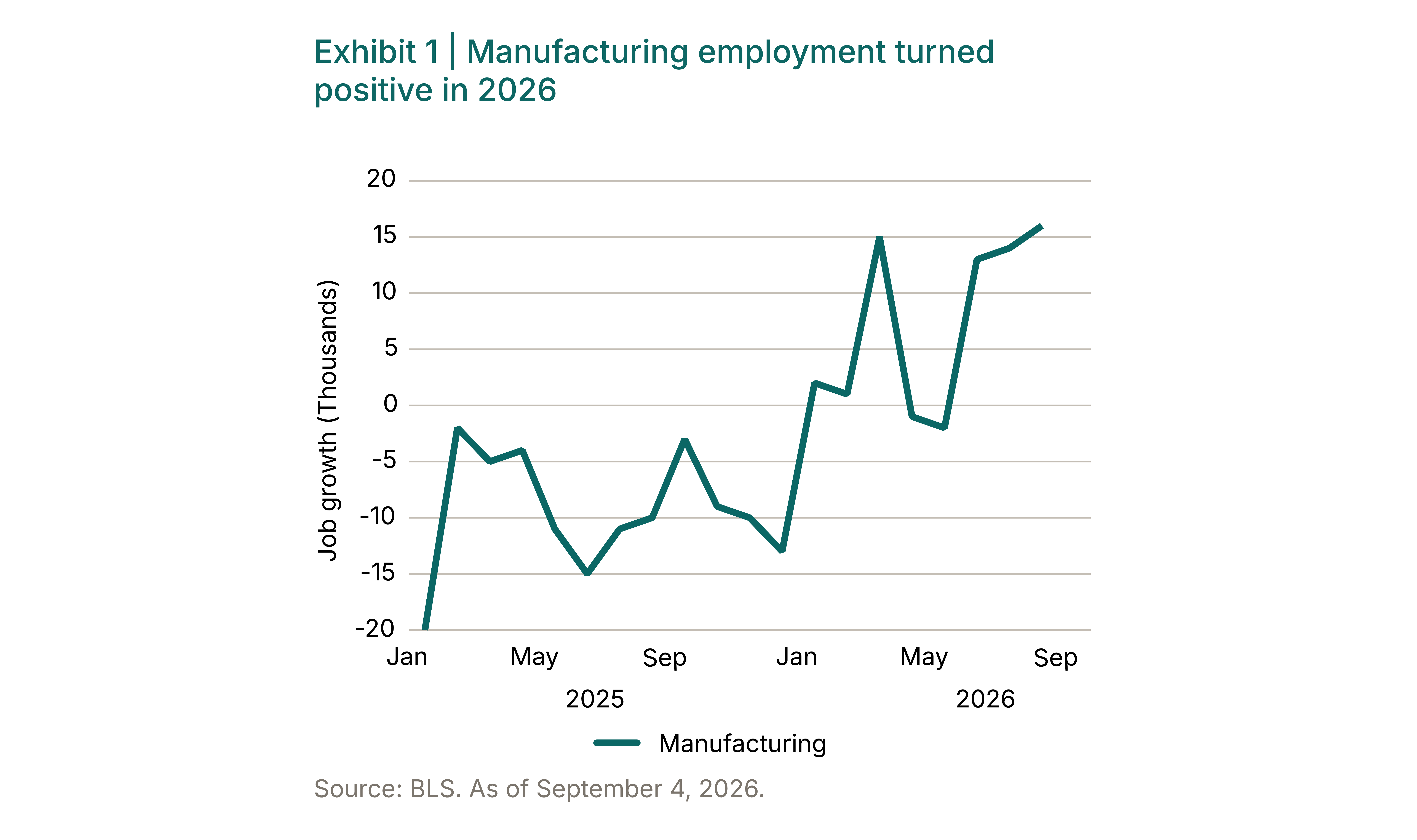
The manufacturing sector did not see a single month of positive job growth in 2025; in fact, it shrank every month. Since the beginning of 2026, however, manufacturing jobs have grown again. In August, U.S. Bureau of Labor Statistics (BLS) data show that 16,000 manufacturing jobs were created.
While most employment gains are still led by services industries, goods-producing sectors like manufacturing and construction have started to contribute to job gains after spending 2025 adapting to tariffs and geopolitical risks.
Overall, payrolls growth has been volatile around a flat trend, especially due to the massive drop in federal government hiring, but private payrolls present a less negative picture.
Is AI reducing youth unemployment?
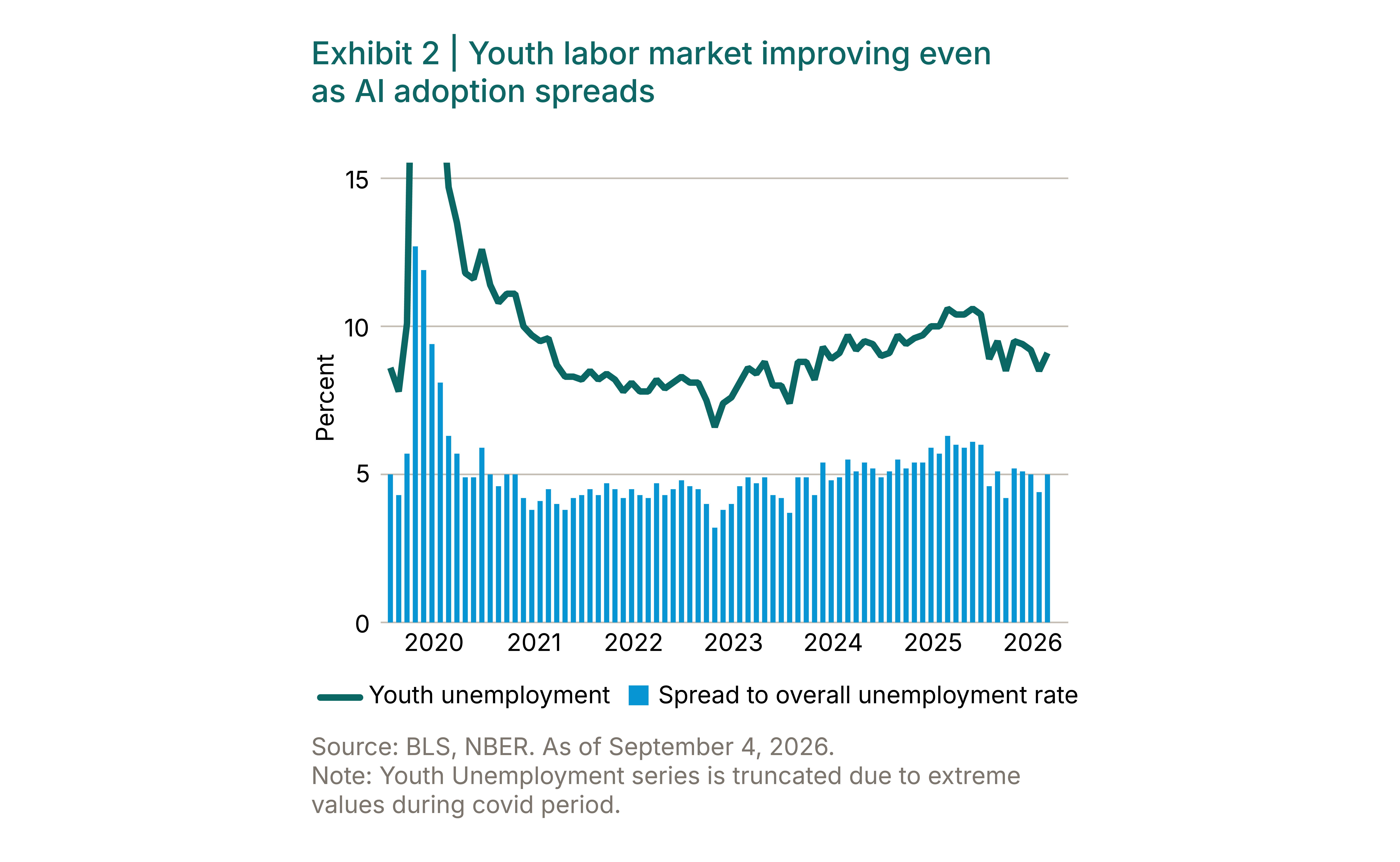
Even as new college graduates may be experiencing difficulty finding jobs, youth unemployment has been falling. The latest BLS data show that unemployment among those aged 16-24 was 9.1% in August, down from 10.6% in November 2025.
The level of youth unemployment is relatively low and has improved substantially since climbing above 10% in 2025. Youth unemployment is also low relative to overall unemployment; the spread between the two has similarly narrowed since last year.
Some new graduates may have had difficulty finding jobs due to AI–especially in specific sectors. But any AI-related job effects must be seen in the context of a relatively good labor market for this demographic.
The labor force participation decline is driven by older workers
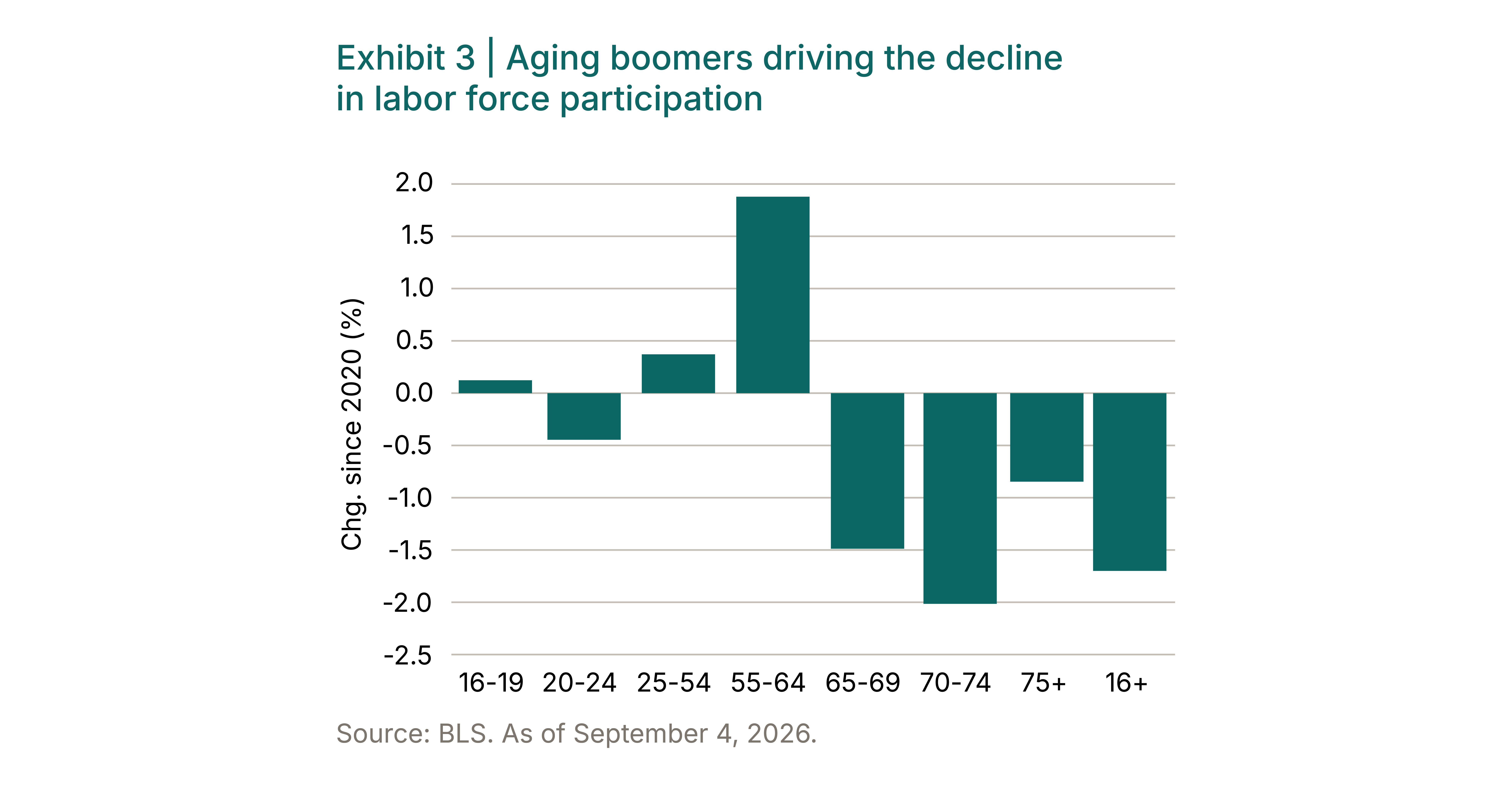
Changes in labor force participation are mainly being driven by baby boomers—those aged 62 and over— leaving the labor force. Younger workers are entering the labor force, but only at marginally positive rates.
The latest BLS data show that the overall 16+ participation rate has declined since 2020 despite increases in the participation rate of 25-64-year-olds, emphasizing how skewed the labor force is toward older workers.
As older workers retire, it is possible that more opportunities open for younger workers, increasing their participation.
Outlook
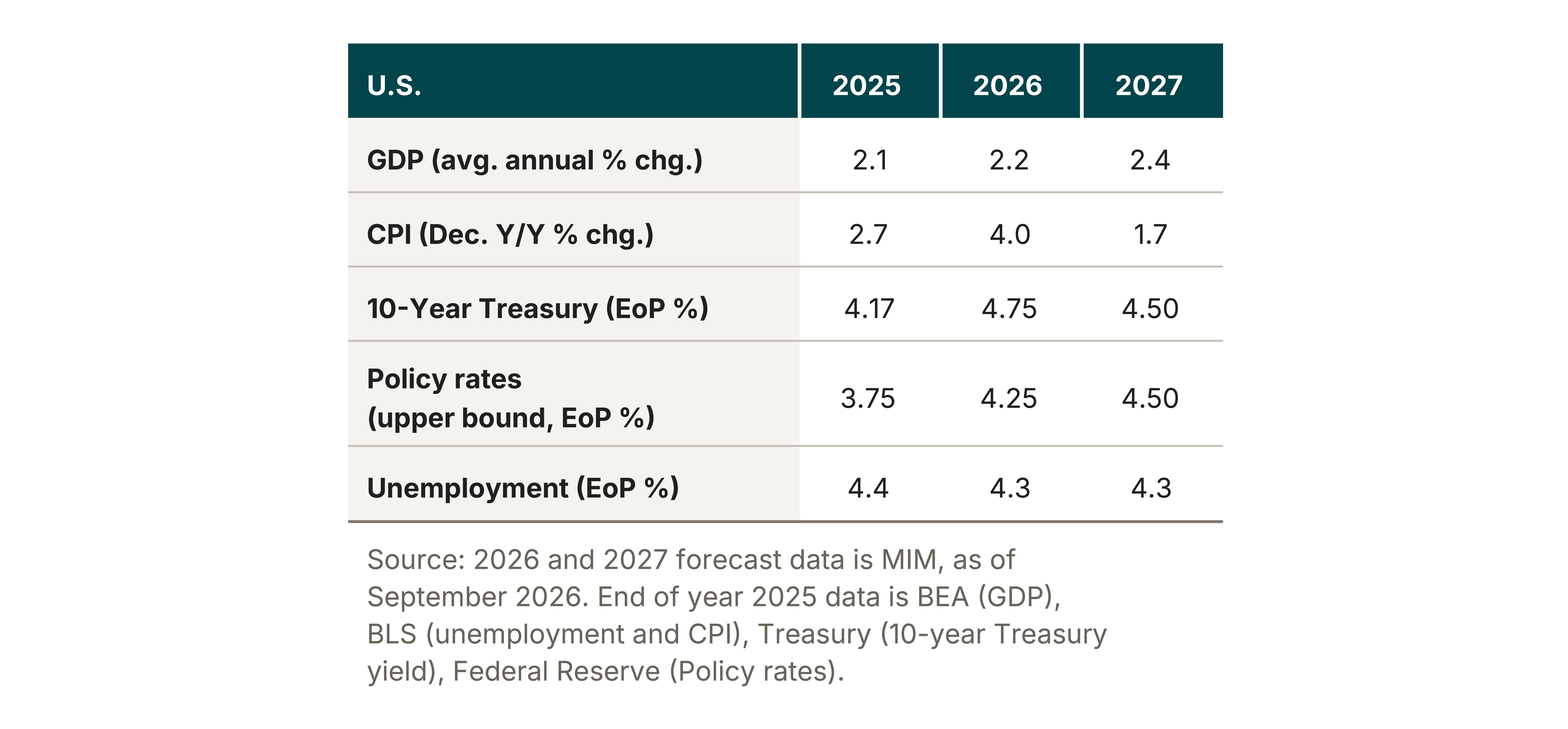
We have revised down our growth forecast marginally compared to last month, due to a slightly weaker second quarter. Our CPI forecast is further revised up by 60 basis points to 4.0%, as the conflict in Iran continues, and oil prices, shipping and transportation costs are hit.
We also expect the Fed to hike once more this year in December, followed by another hike in the first quarter of 2027.
Given the higher inflation, reasonably solid economic growth and markets paying more attention to the fiscal situation of the U.S., we have revised up our 10-year Treasury forecast from 4.50% to 4.75% for year-end 2026.
Risks
There are two main risks to our current outlook.
First, the Iran conflict has already gone on longer than many expected, and it is entirely possible that its effects continue into next year. If inflation continues to be a problem (or the two rate hikes currently expected by markets are not enough), then the Fed will likely raise rates more than currently expected. This would push up both the policy rate and 10-year outlooks.
Second, the AI boom is seeing multiple threats to its unconstrained growth of the last several quarters. There are the misalignment concerns expressed by several AI companies, which raised worries about disruptions to internet-connected services including infrastructure, and the secondary risk of tighter regulation. Another concern is the popular shift against AI in the U.S. and its effect on future growth. There are also rising concerns about the business models that support valuations and the level of borrowing in the AI- and AI adjacent sectors.