Inflation Squeezes Consumers and Producers Alike
Jun 2026
View available investments in your area

Sorry, we couldn't find any results matching
Please:

The conflict in the Middle East continues to make its way into the inflation statistics. Data released in May show another month of high CPI headlines in April. PPI had the biggest monthly increase since March 2022, and import prices are up 4.2%, year over year. Excluding the energy shock from the headline numbers improves the picture, but the inflationary current is likely to persist through mid-year.
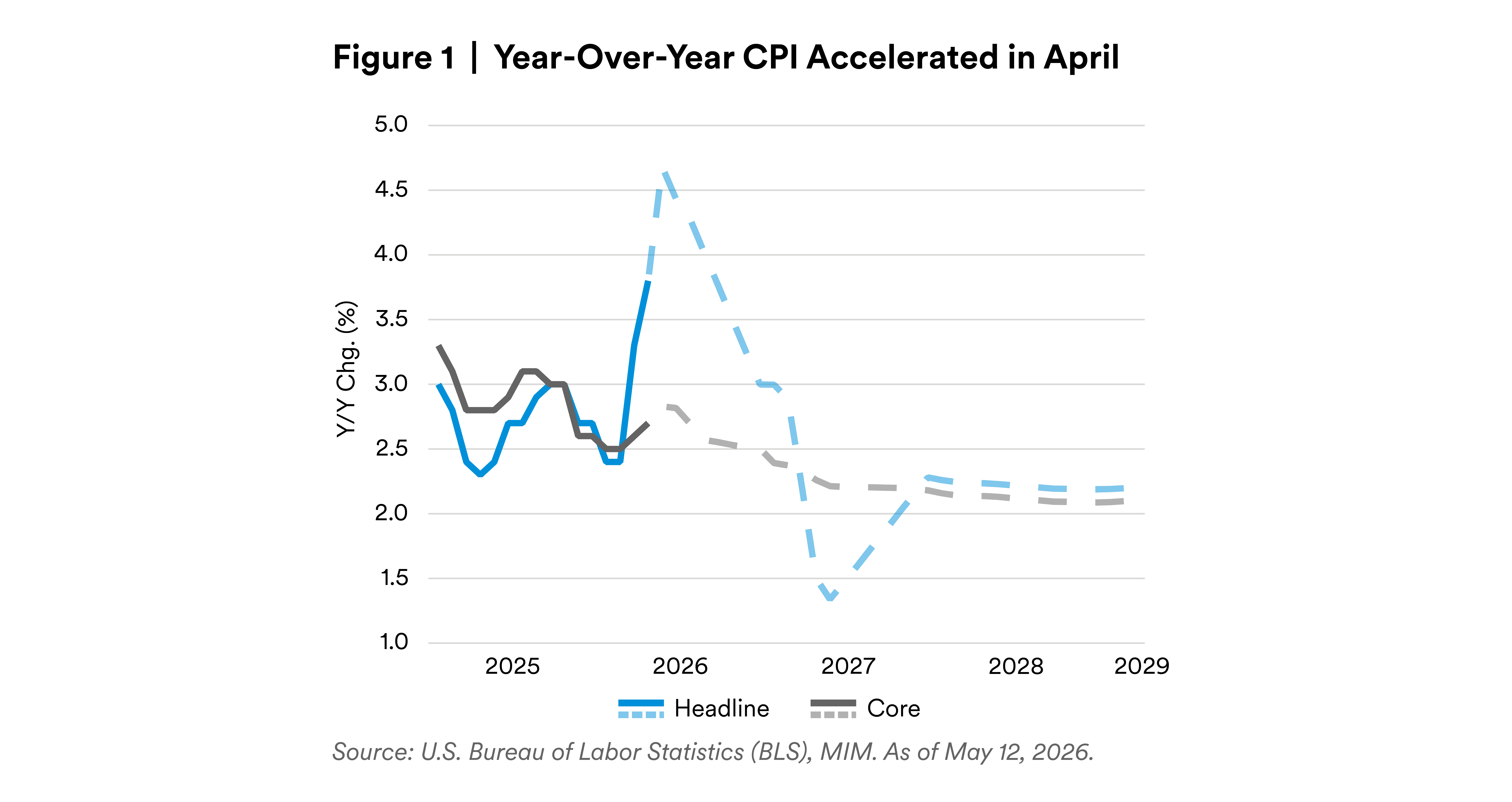
High energy prices brought year-over-year headline inflation to 3.8% in April, up from 3.3% in March. Energy prices were responsible for over 40% of the headline increase.
Core CPI came in at 2.7%, remaining only modestly affected by the energy price effects. Core CPI rose by 0.4%, month on month in April, but approximately 0.1% was attributable to a data artifact left over from the shutdown in October.
Goods inflation is not showing many tariff effects and remains subdued, despite the price indexes for furniture and personal care items showing one of the bigger increases this month.
The Middle East conflict exacerbates near-term inflation issues while adding new ones, somewhat reducing the likelihood of the Federal Reserve cutting rates this year, even as Kevin Warsh starts his tenure.
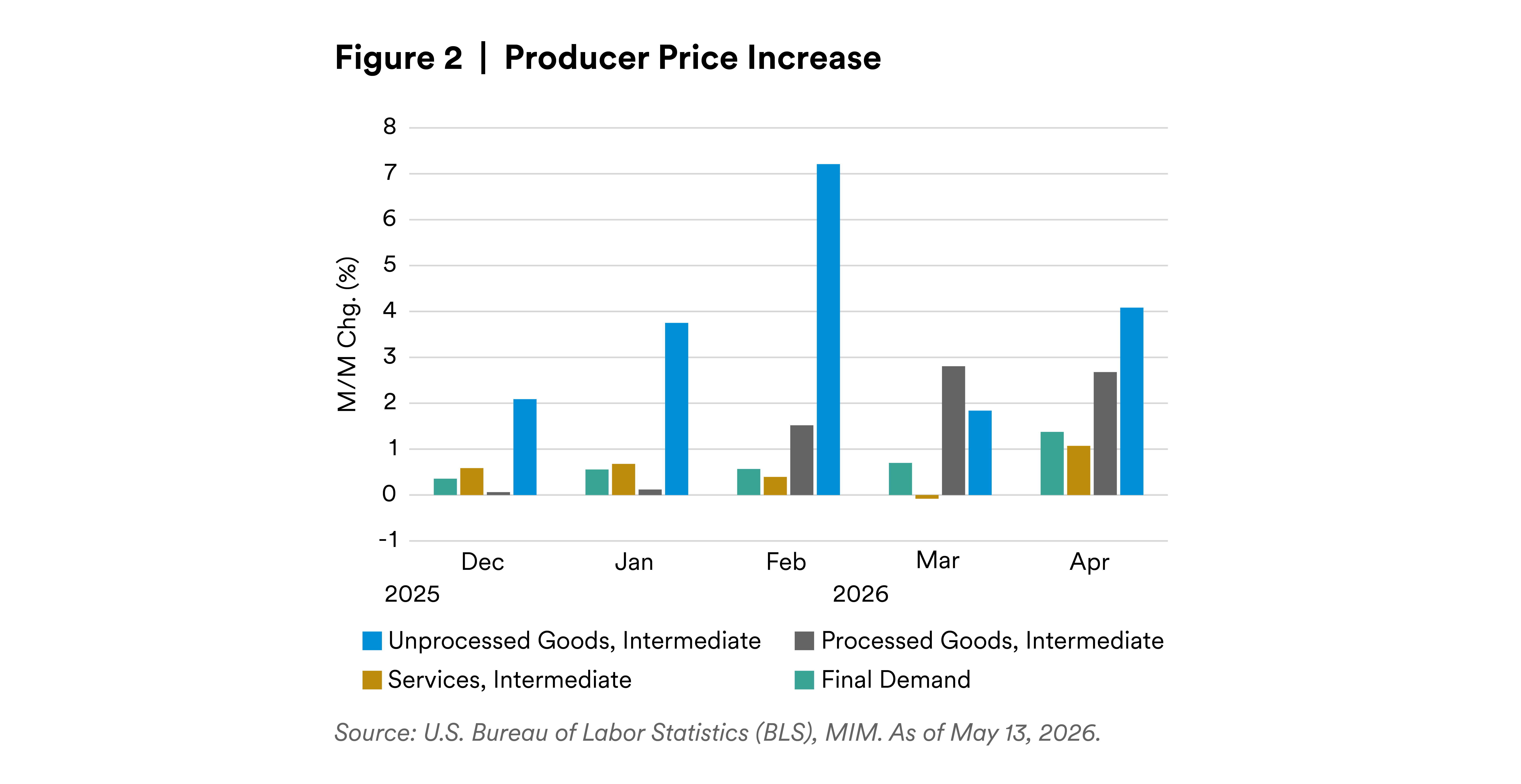
PPI increased 1.4%, month-over-month in April, and is up 6.0% over the year. Core PPI increased 0.6%, the biggest increase since October 2025. Similar to the case with consumer inflation, there is a risk that these inflation pressures will remain for the next few months.
The biggest price increases were in unprocessed goods firms, which include raw materials. Downstream sectors saw less inflation, meaning that firms higher up in the supply chain have not (yet) passed along all their cost increases. Final demand firms are not immune from cost increases, however, and faced a 7.8% price increase for final demand energy. On the services side, truck transportation and fuel and lubricant retailers are feeling price pressures as well.
Producer prices will be important to watch even as the oil shock fades. Even though there are cases, such as in March 2026, when PPI increased less than expected, businesses are facing increasing costs overall. After falling rapidly in 2022, PPI has been rising steadily since 2023. Today, headline PPI is at 6%, year over year, and core PPI is at 4.4%, year over year. But in April 2023, headline PPI was at 2.3%, year over year, and core PPI was at 3.1%, year over year.
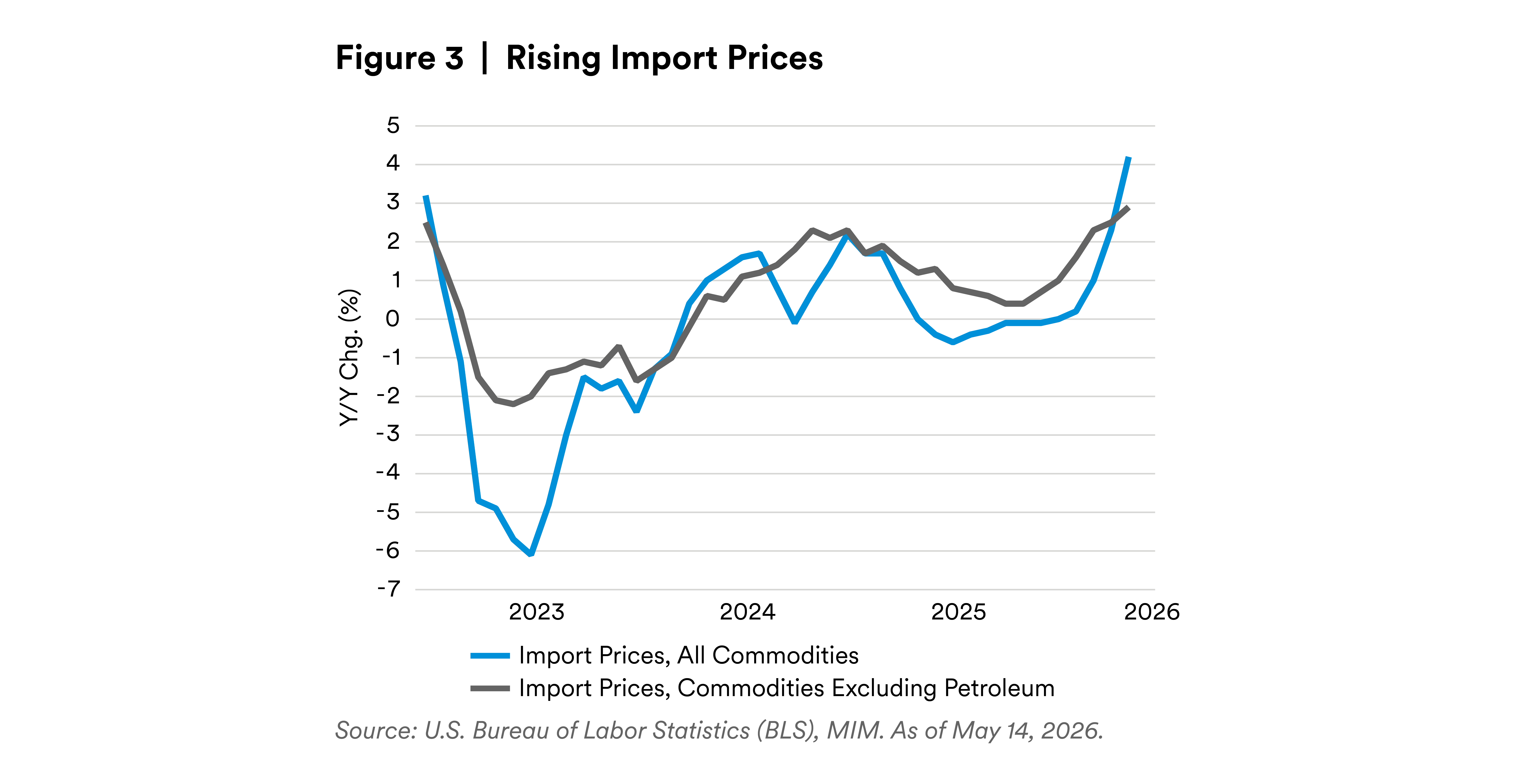
Import prices increased 1.9%, month over month in April, bringing the annual increase to 4.2%, year over year, a rate of increase last seen in October 2022. Import prices were affected by fuel and energy imports, but prices excluding fuel still rose 0.8% over the month and are up 2.9%, year over year.
The two biggest categories of increase were industrial supplies and materials, which increased 13.1%, year over year in April, and capital goods, which increased 4.6%, year over year in April.
Similar to the case with producer inflation, import prices fell rapidly after 2023, but are important to watch because they have been moving in the opposite direction for years since then. The Middle East conflict created a distinct spike due to energy costs, but prices have now moved from a sharp deflation of 6% in 2023 to a 4% increase today.
And just as with consumer and producer inflation, the spike in import price inflation is likely to take months to resolve, at minimum.
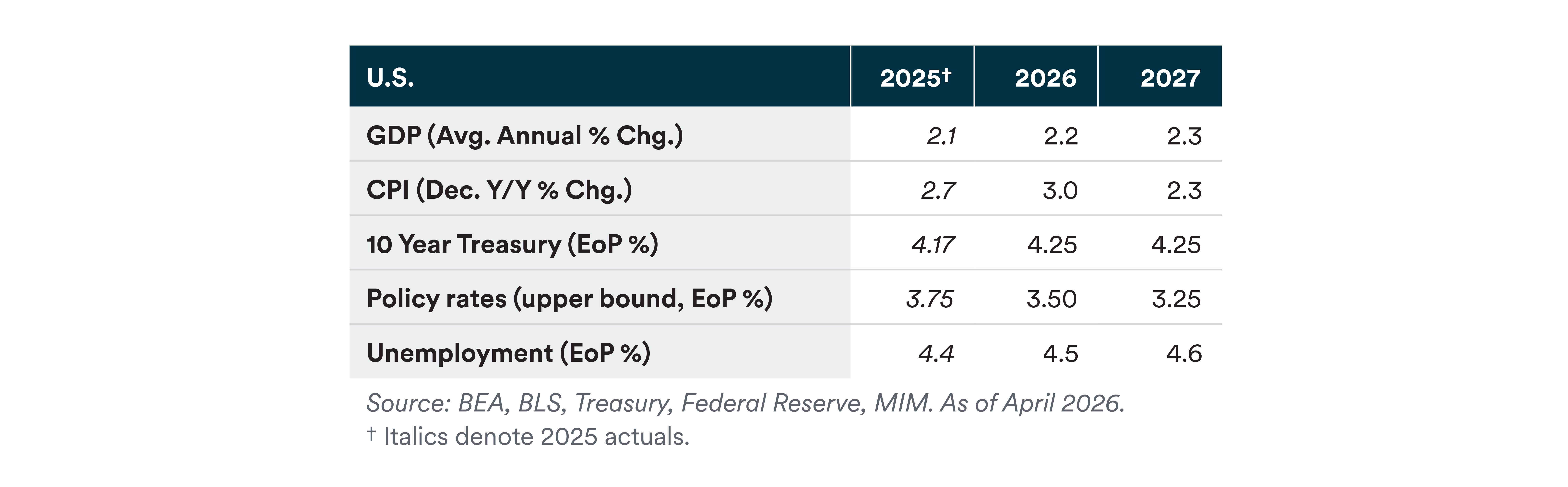
We expect 2026 GDP growth to be roughly in line with 2025, driven by moderate consumption and solid non-residential investment. We expect net exports to remain strong, as U.S. businesses try to shift away from import-driven businesses. The conflict in the Middle East has dominated recent headlines. We believe the oil price shock will drive up inflation only in the short run, so our overall 2026 inflation forecast has been revised upward to 3.0% from 2.6%. We believe labor demand will remain lackluster in 2026, meaning the labor market, while balanced, is vulnerable to shocks.
Given that both sides of the Fed’s mandate are under threat, and uncertainty is greater than it was some months ago, our base case is that the Fed will only cut rates once this year. The timing of additional rate cuts would be pushed back into 2027. We do not believe the current oil price shock warrants a hike, as the shock is temporary and unlikely to affect core inflation much more than it already has. However, if high oil prices continue to push up producer and consumer inflation, the likelihood of rates staying constant is significantly higher.
The biggest risk to our forecast comes from the conflict with Iran and the continued closure of the Strait of Hormuz. While we have revised our inflation base case up by 40 bps for the year, the lack of successful negotiations, a U.S. blockade on the Strait and ongoing uncertainty about how the conflict will resolve may keep oil prices higher for longer, which raises the probability of weaker growth. Looming oil shortages in some regions also have the potential for more severe impacts on growth and inflation.
If the Strait reopens within a few months, then there may be some room for the Fed to cut rates before the end of the year, as transportation and commodity prices recover. If not, then any rate cuts will likely be pushed back to next year.