Almond Market Outlook
Aug 2025
View available investments in your area

Sorry, we couldn't find any results matching
Please:
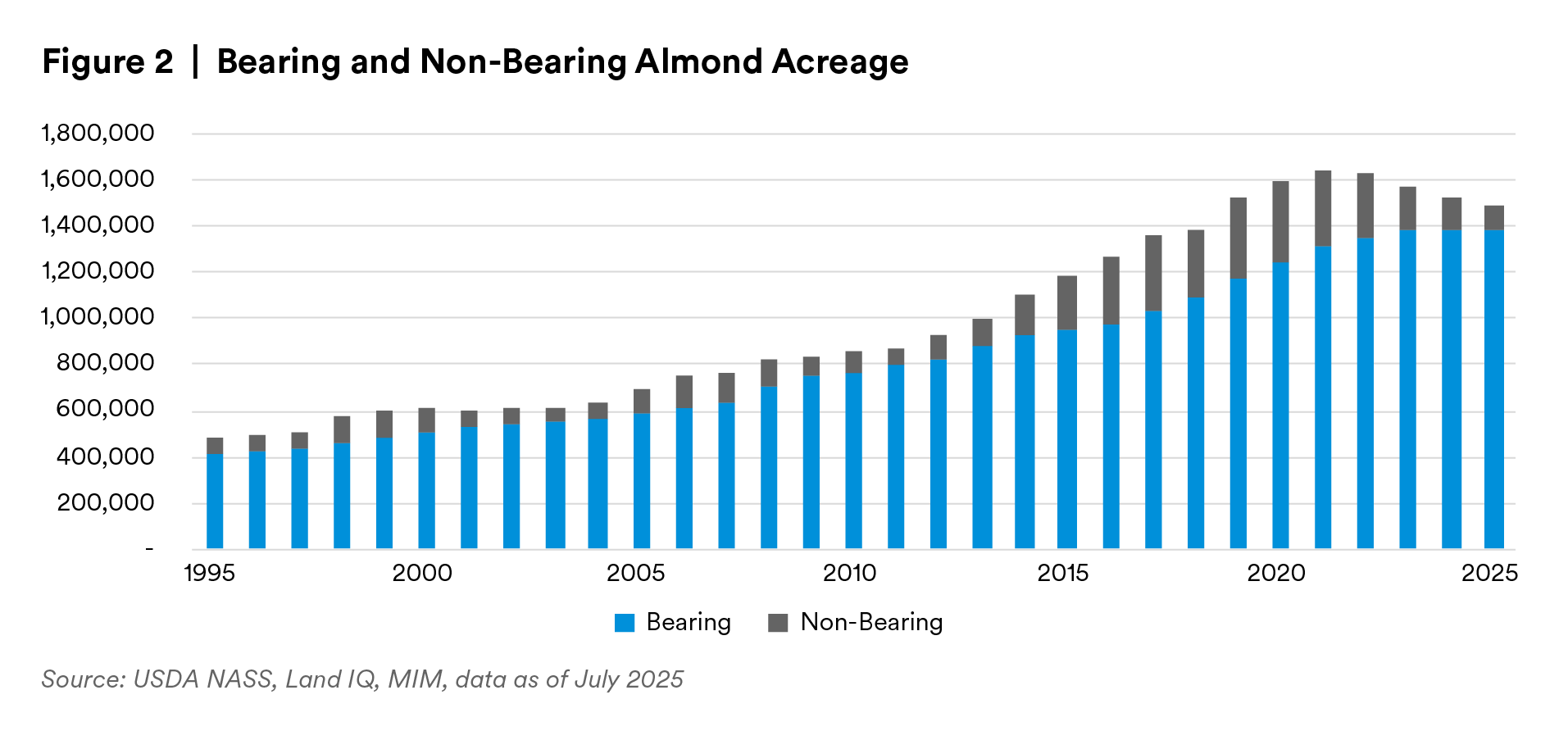
After enduring a decade marked by fluctuating prices, global disruptions and regulatory shifts, the almond industry appears poised for a return to more sustainable profitability. The decline in non-bearing acreage signifies that the industry has identified the geographical boundaries of economically feasible production. Lessons learned from failed speculations on unproven land will likely deter future entrants from overenthusiastically expanding supply and driving down prices. Having survived a supply glut and learned to manage water resources effectively, almond farmers are now positioned to benefit from more favorable conditions in the coming years. While not immune to short-term fluctuations in prices, as evidenced by the recent softening in prices in reaction to the USDA’s recent objective estimates report, producers are no longer at the mercy of external factors and are now equipped to drive their own success.
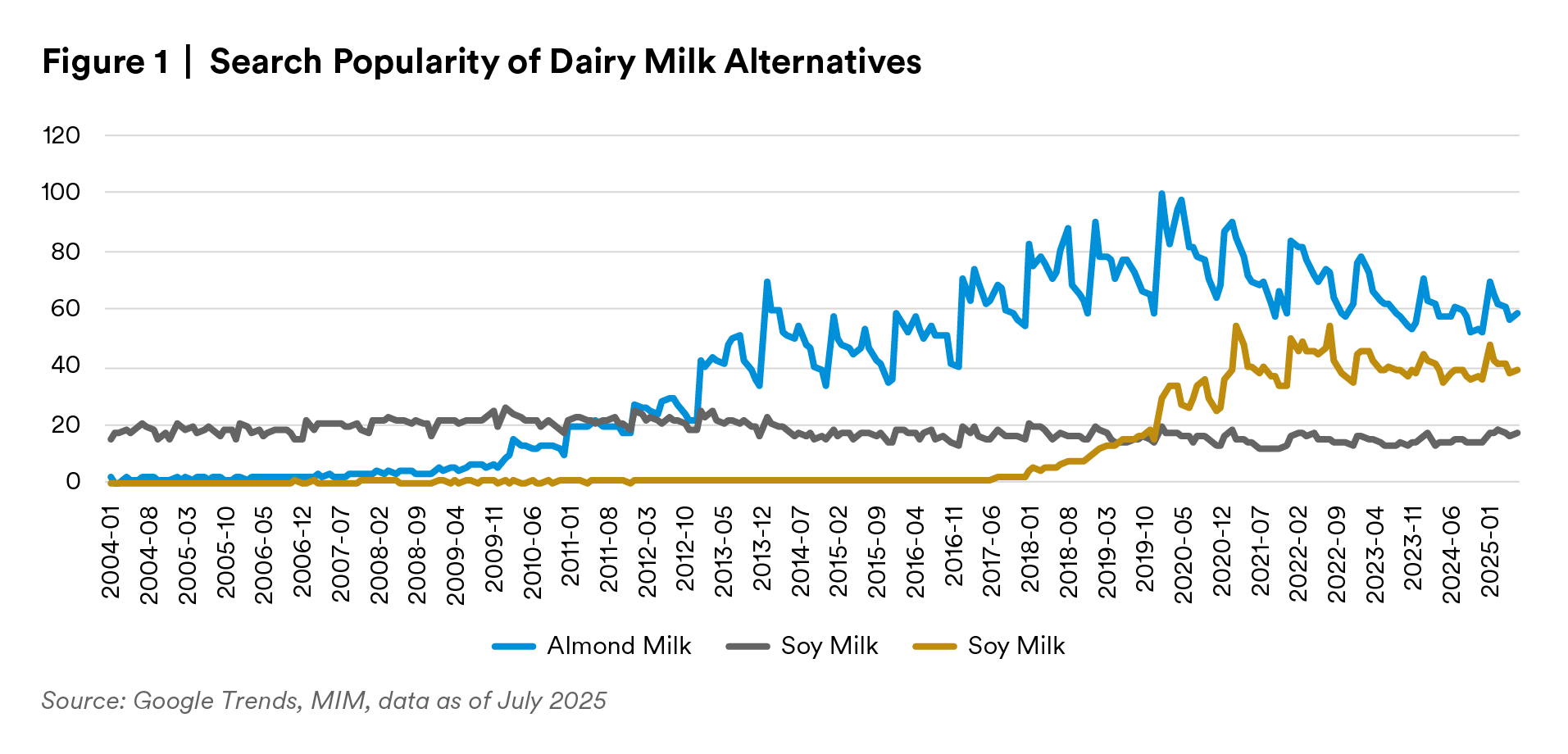
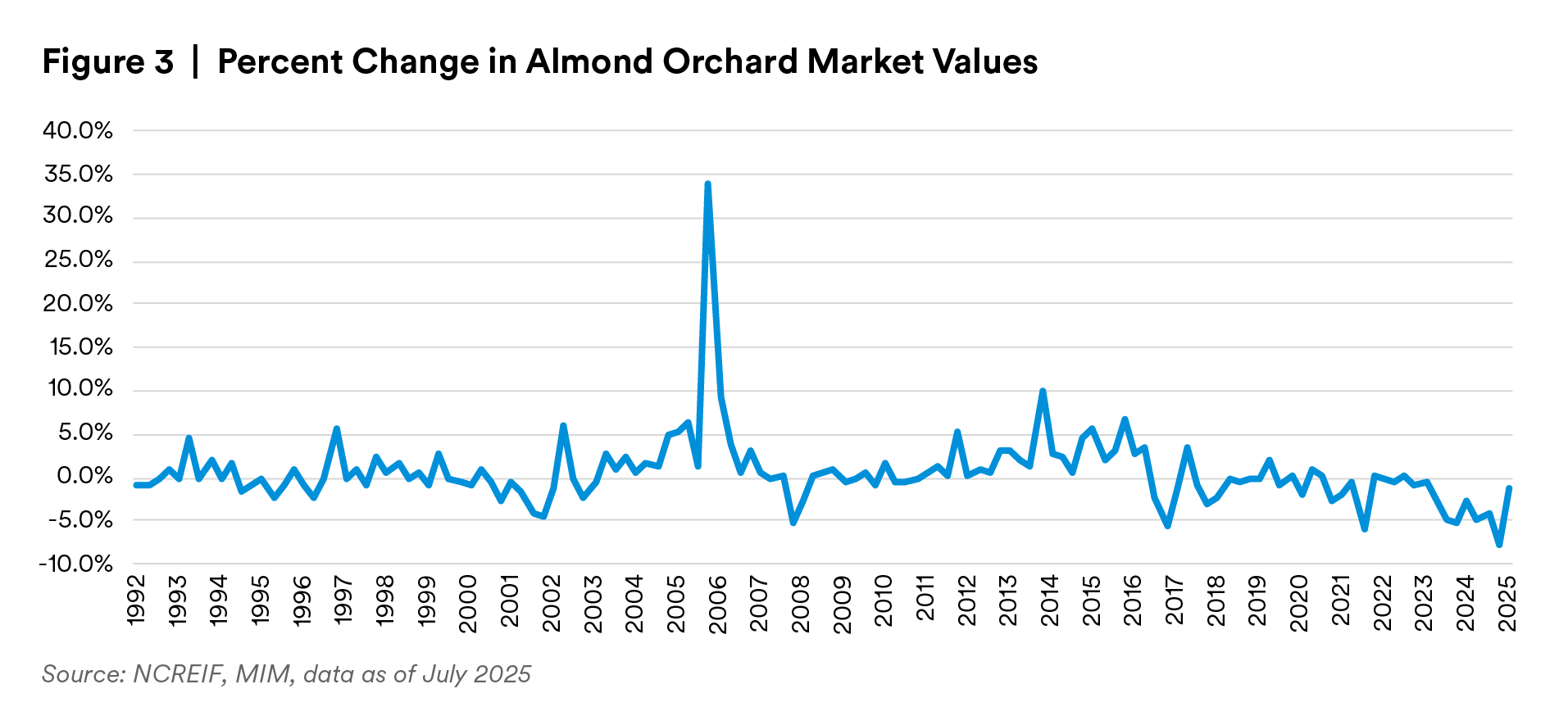
In the 2010s, the almond industry benefited from a rapid increase in demand driven by consumers seeking healthier diets and dairy alternatives. Almond milk, in particular, saw a significant rise in popularity compared to other dairy milk alternatives (Figure 1). The rise in almond demand caused high prices and profitability that was soon followed by a rapid influx of new producers and investors. This period of expansion led to a significant increase in almond acreage (Figure 2), often pushing production into land that was unproven or lacking an adequate water supply. Further, because of the relatively long lag between the decision to plant an orchard and the time that orchard begins producing, the price and profitability signals are significantly delayed. As a result, more planting occurred than necessary from approximately 2014–2020, and an oversupply was created. By the time the effects of this increased supply were felt in 2020, prices had already begun to decline below breakeven levels, and this imbalance was exacerbated by shipping container shortages during the pandemic.1,2 This supply overhang, combined with the Sustainable Groundwater Management Act (SGMA) redefining the geographic boundaries of economically viable almond production, led the valuations of almond orchards to decline significantly (Figure 3).
The pandemic-induced container shortages have long since eased, and the ripple effects of backlogged inventories are now faint. The 2024/2025 marketing year carry-in from the previous crop was 37% lower than 2023/2024,3 resulting in a much more manageable inventory for the industry. While the industry will need to continue aggressively marketing in anticipation of harvesting three billion pounds in 2025, the industry is at the precipice of a healthier balance between supply and demand than it has been in the last several years.
The Sustainable Groundwater Management Act redefined the geographic boundaries of economically viable almond production. While SGMA led many to learn painful lessons, the legislation likely prevented a deeper price trough by deterring further acreage expansion, and will continue to support prices going forward. The necessity of having set aside land for an adequate water allocation will effectively serve as a barrier to entry and help mitigate the risk of another aggressive supply expansion outpacing growth in demand.
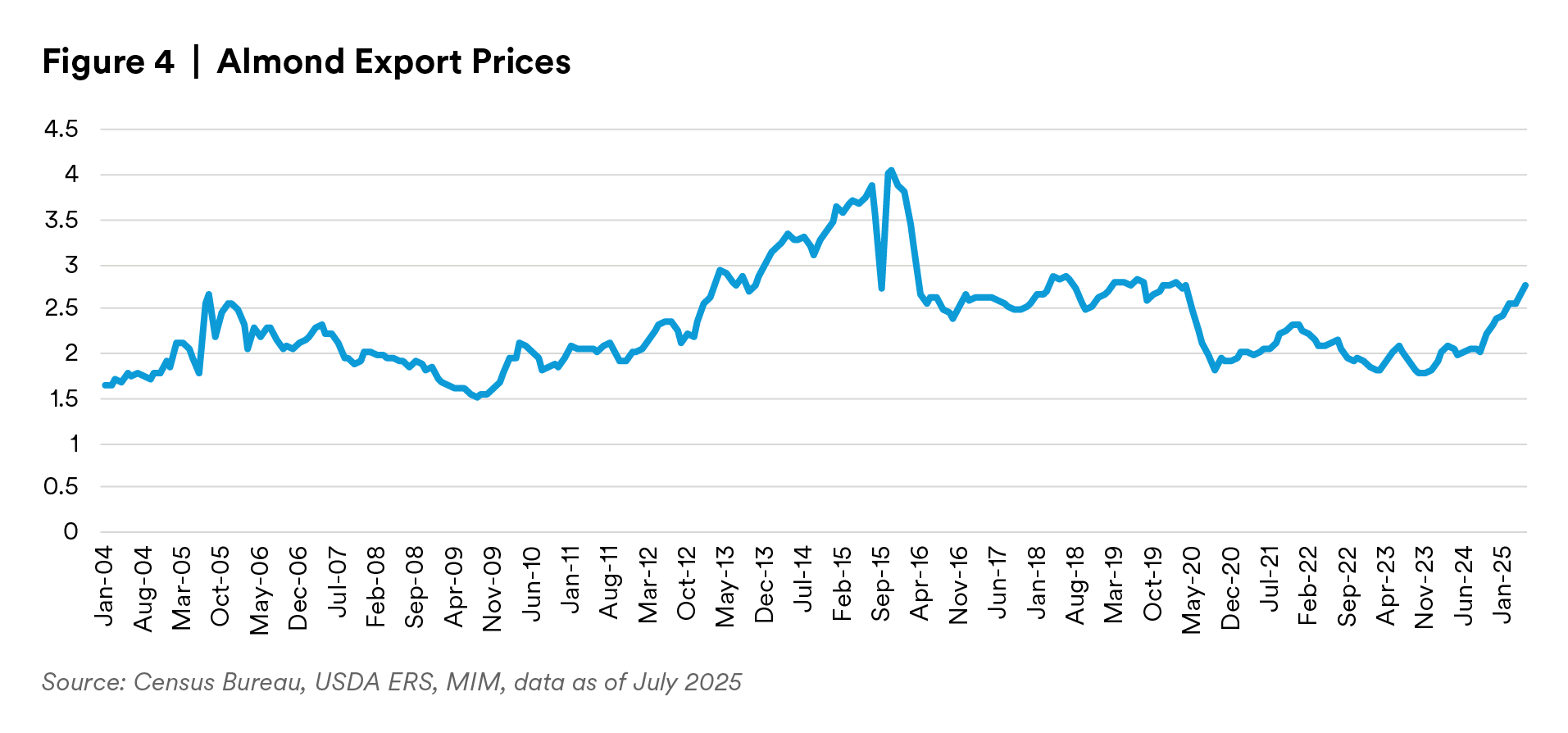
Due to the flattening of bearing acreage, the decline in non-bearing acreage, supply constraints imposed by SGMA, the resolution of shipping container shortages and inventory disruptions, almond prices will be supported in the long run. Prices experienced a significant rally from the fall of 2023 to the summer of 2025 before softening (Figure 44). As export markets expand, interest in healthy diets resurges5 and economies continue to develop, we expect further price increases to be sustainable. However, the industry must remain vigilant against potential risks.
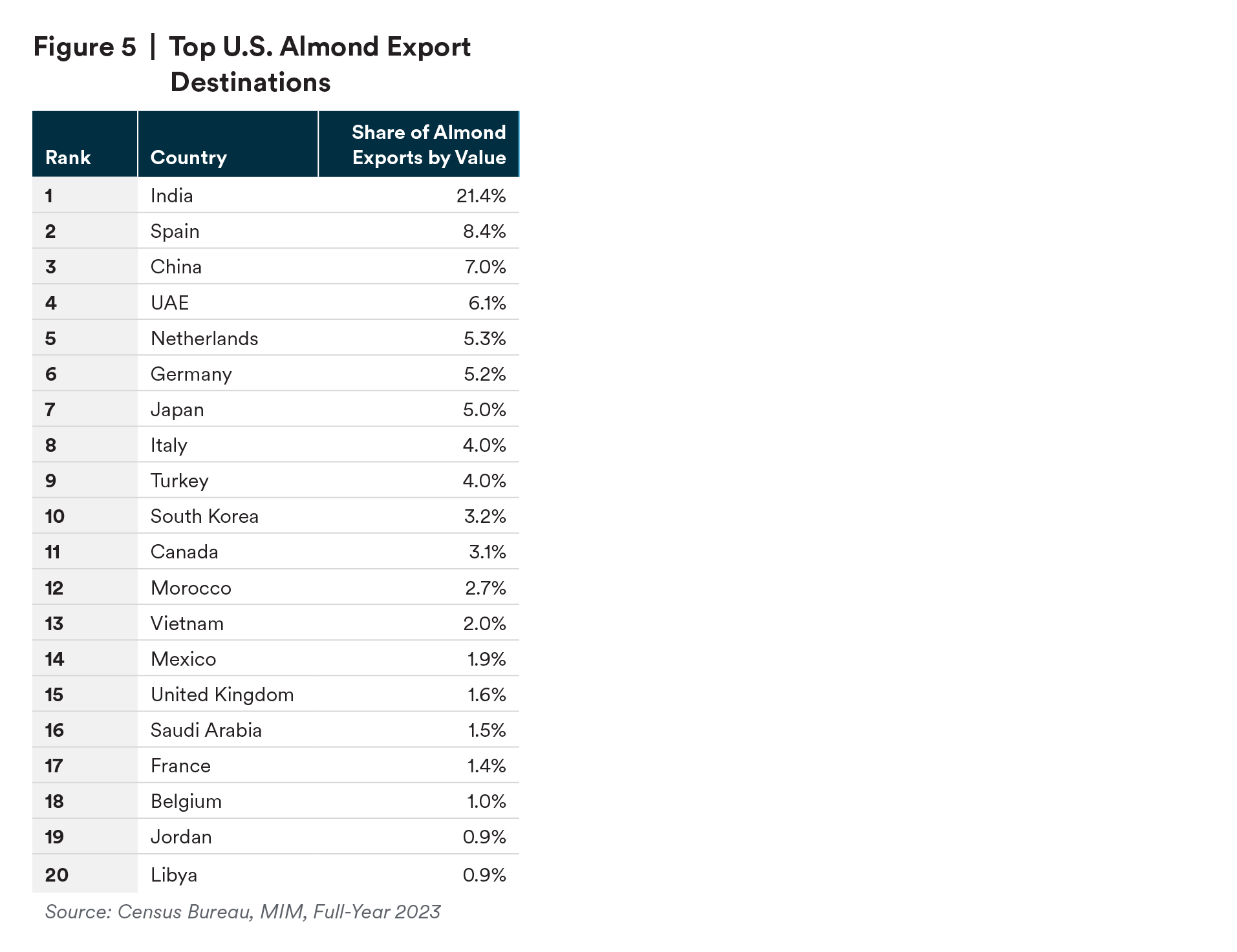
Most trading partners have been fairly restrained in their response to U.S. tariffs. However, the almond industry’s significant reliance on exports — totaling 70% of production — makes it a prime target for retaliatory tariffs. If almonds are eventually targeted, this could reverse recent price gains. However, the Agriculture Secretary’s promise of a revamped Market Facilitation Program to compensate producers,6,7 along with the inability of other countries to replace American almond production, serve as key mitigants to this downside scenario.
The uncertain trade situation could also result in an upside scenario. If agriculture once again becomes a focus in trade negotiations, almonds could be well positioned as a strategic commodity for the Trump administration to signal a win in negotiation. If bilateral trade agreements with mandated purchase commitments of almonds are signed, this could trigger a significant price rally. MIM estimates that adding an annual purchase commitment of 50 million pounds from 2026 through 2029 could increase average prices by 6% over that period, resulting in nearly $2 billion in additional revenues to the sector.
The almond industry appears headed for a more disciplined and profitable era. Years of volatility have instilled a deeper understanding of the structural limits to profitable expansion, particularly regarding water access and regulatory compliance. With speculative acreage growth behind us and inventory levels normalizing, the industry is entering a phase where supply and demand are more closely aligned, and producers will have greater control over their profitability outcomes. Looking ahead, sustained profitability requires a continued focus on operational efficiency, strategic site selection, disciplined growth and proactive engagement from industry groups to drive demand and expand market access.