Global Outlook 2026
Oct 2025
View available investments in your area

Sorry, we couldn't find any results matching
Please:

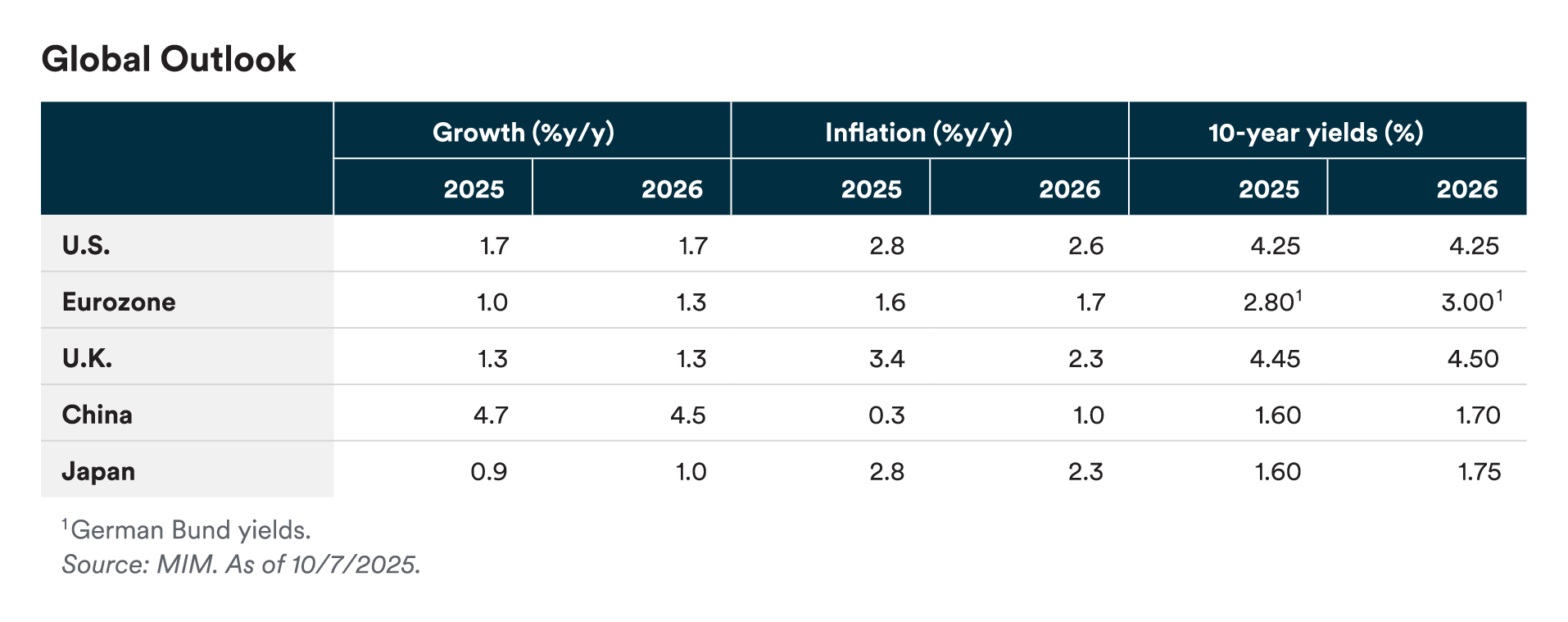
We expect that growth will be modestly positive throughout 2026. The wealthier strata of consumers continue to spend, supported by the strong market valuations and stability in the labor markets.
Specific areas of business expenditure have resumed following tariff-induced bouts of uncertainty, as have those portions of business expenditures relating to the boom in AI adoption and its supporting infrastructure.
Concerns about tariff policy appear to have peaked earlier in the year across substantial parts of the market and the economy.
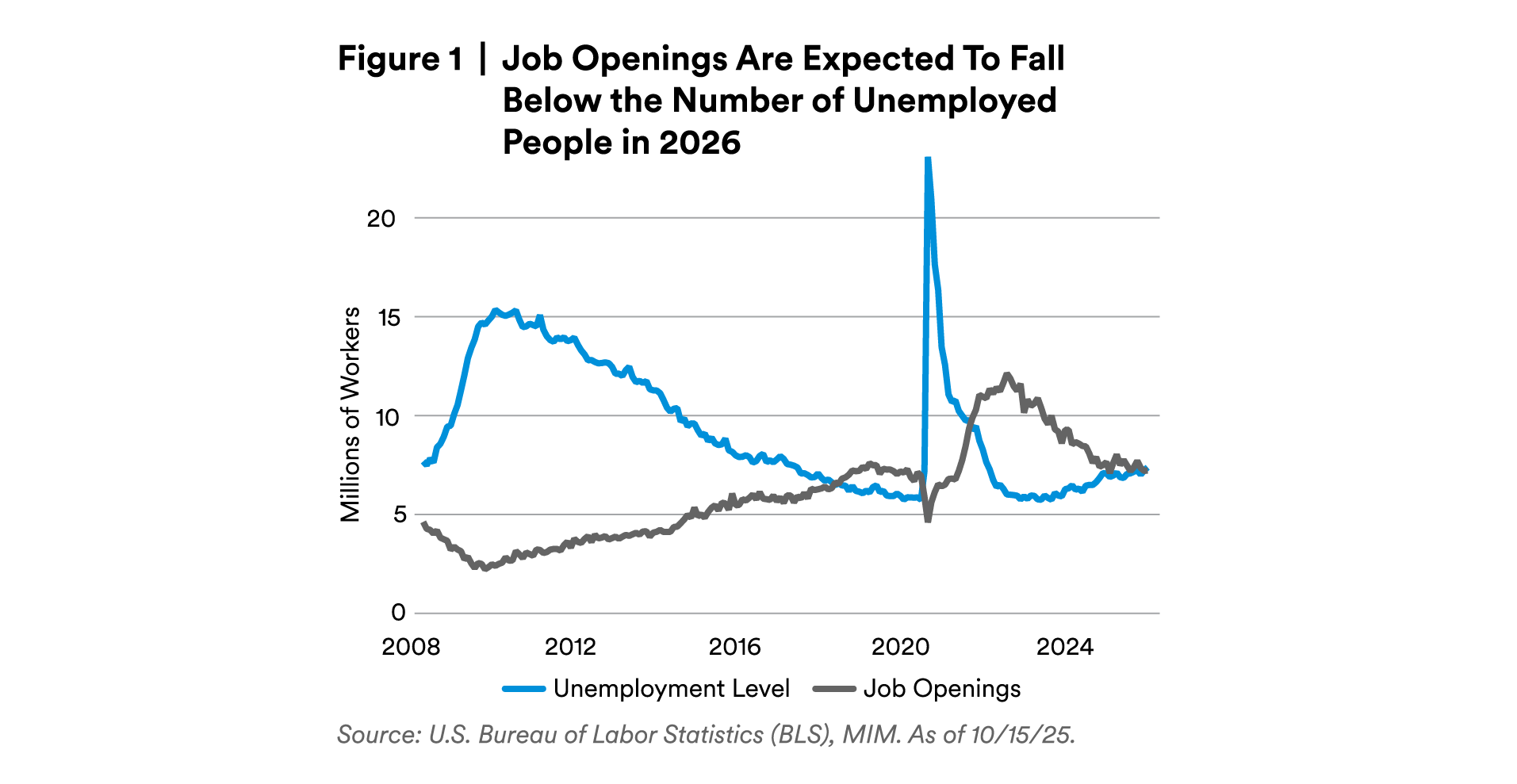
Our primary economic concern for 2026 is the labor market. Businesses appear to be weathering the policy uncertainty and tariff-induced cost increases by cutting costs and delaying investment without resorting to wholesale layoffs. This is a good thing, but new labor market entrants are not being fully absorbed, and we expect that to continue into the new year. We expect firms to remain cautious about hiring throughout 2026 even as they restart major investment projects. Younger workers and those with fewer in-demand skills are likely to find it difficult to secure jobs even as the unemployment rate remains low by historical standards.
We place a 30% probability of recession on the U.S. economy in 2026, with risks primarily emanating from renewed concerns about tariff policy, the relatively narrow base of economic strength, and the potential for substantive market corrections.
We expect the Federal Open Market Committee (FOMC) to cut rates again before year-end 2025 and to continue to cut next year. Despite inflation still being above its 2% target (for nearly five years now) and heading in the wrong direction, there appears to be rising concern among FOMC members around
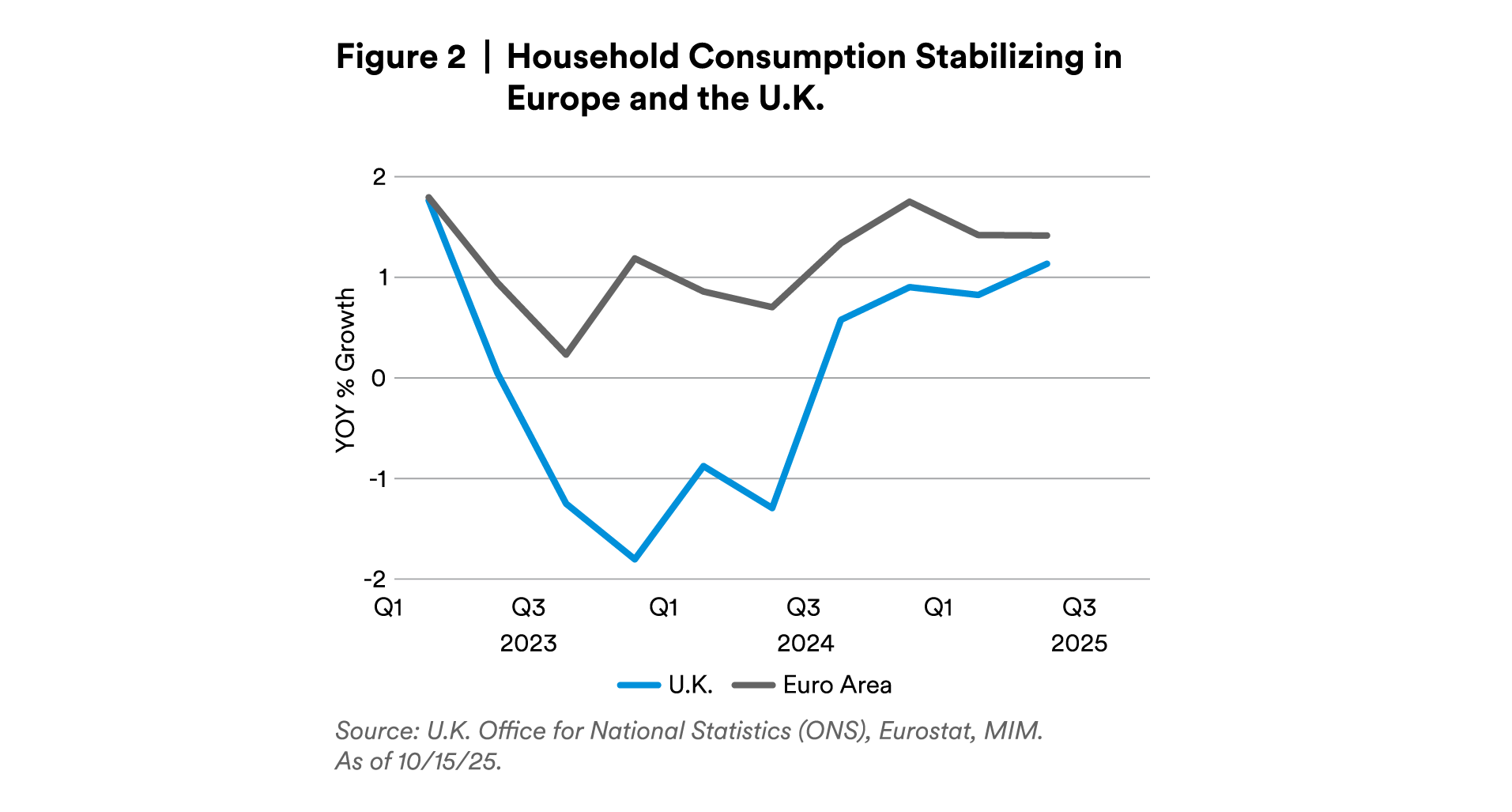
Higher U.S. tariffs and slower global trade growth are expected to continue to weigh on Europe’s economic prospects in 2026. While trade agreements were reached on baseline U.S. tariff levels of 15% for the EU and 10% for the U.K., confidence that these deals will stick is tenuous and the negative impact on Europe’s exporters will continue to play out next year. Nevertheless, partly based on an assumption that the peak level of trade uncertainty is behind us, we forecast a moderate pick up in the pace of euro area growth to 1.3% in 2026 from around 1% this year, and for growth in the U.K. to remain steady at around 1.3%.
Private consumption should be supported by a robust euro area labor market, positive real wage growth, and looser monetary settings. The European Central Bank looks to be near or at the end of its easing cycle. However, the lagged impact of its having already halved its deposit rate since mid-2024 (to 2%) should help support the growth outlook. Fiscal policy is set to be moderately looser at the euro area level as Germany’s government begins to ramp up spending on infrastructure and defense.
In the U.K., meanwhile, we anticipate more weakening of the labor market along with a slowing of real wage growth and easing of inflationary pressure after its late-2025, policy-driven rebound. The Bank of England has reduced its bank rate by 125bps since July 2024 to 4% and we expect it to continue its cautious rate cutting cycle into H1 2026 (to a terminal bank rate of 3.25%).
In China, we expect GDP growth to remain generally subdued at around 4.5% in 2026. Headwinds would be drags from softer external demand via U.S. tariffs and the ongoing anti-involution campaign against excess competition and capacity, which would crimp production, investment, and employment. The property sector will also likely remain challenged. We expect continued policy support to serve as a partial offset, with fiscal policy taking the lead to encourage consumption and investment as well as addressing local government debt risks.
On the inflation front, measures to promote consumption and address excess capacity, as well as base effects from 2025, should lift the GDP deflator out of negative territory by the middle of next year, while CPI should average around 1%.
In Japan, we expect the economy to grow by about 1% in 2026, roughly in line with this year and remaining above potential. We expect domestic demand to drive growth. With inflation slowing, real wage growth should gain momentum, supporting household consumption. Capital expenditures are likely to remain supported by structural demand for AI and digitization.
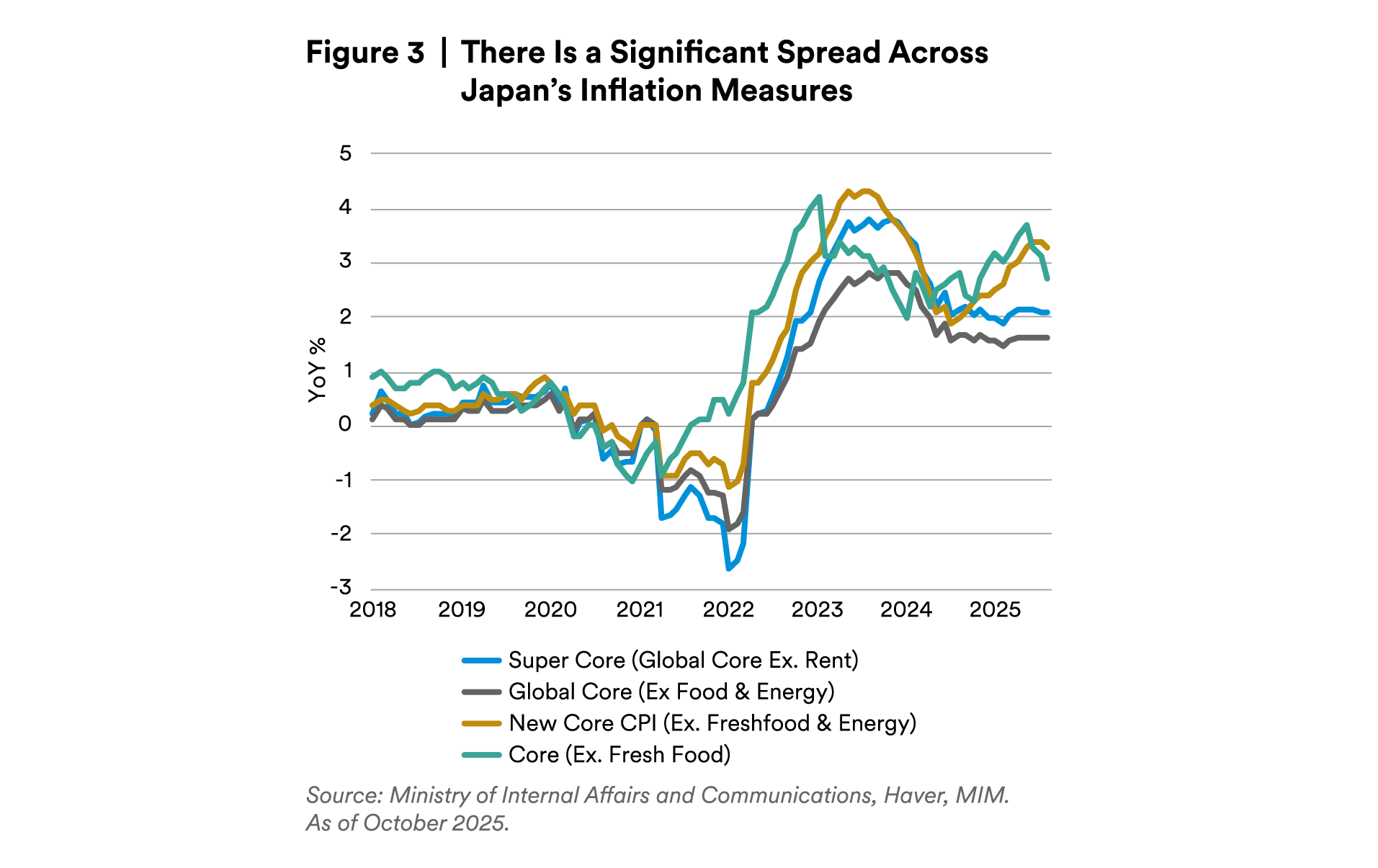
Whereas our baseline for 2025 has been for the Bank of Japan (BoJ) to remain on hold, we believe it will more actively consider hiking the policy rate in 2026 if it gains more comfort around global growth and domestic “underlying inflation”, which has been more subdued than core CPI readings to date. Core CPI readings remain above 2%; however, Global Core CPI (best approximating the BoJ’s “underlying inflation” assessment) has hovered around 1.5%.
Another key driver of monetary policy will be fiscal policy from the next government. For that, we need to wait for the political dust to settle.