Leveraged Finance Asset Allocation Insights: Focus on High Yield
Sep 2026
View available investments in your area

Sorry, we couldn't find any results matching
Please:

Key takeaways
Global leveraged finance markets are navigating a highly complex macroeconomic environment and a historic, supply-driven technical shift. A higher-for-longer interest rate regime dominates the macro picture. Solid labor market data–underscored by a balanced 4.1% unemployment rate–as well as persistent economic strength and higher commodity prices due to the Iran conflict have forced a substantial backup across the Treasury curve. Under the policy framework of Federal Reserve Chair Kevin Warsh, markets have priced out near-term easing, anchoring the U.S. 10-year Treasury yield near 4.6%-4.7%. Against this rates backdrop, an unprecedented deluge of data center and AI infrastructure issuance has triggered a capital reallocation across credit markets. In high yield and leveraged loans, as in other corners of the credit markets, a concentrated group of digital infrastructure developers has heavily dominated net supply. Periodically, we have seen signs of investor fatigue and supply overhang pressuring market absorption.
The AI infrastructure boom has accelerated a divergence between high-yield bonds and leveraged loans. The institutional loan market is heavily weighted toward legacy software and business services issuers, leaving it more exposed to disruption from generative AI, while offering less exposure to new, capital-intensive AI infrastructure providers. The institutional loan market also faces modest headwinds from slowing CLO formation, as deals near the end of their reinvestment periods, and sponsors pursue more aggressive liability management exercises. The high-yield bond market has superior credit quality on average, insulated by minimal exposure to software and business services, and high-quality issuers, with an overwhelming portion of the market anchored in the BB or higher rating categories. Therefore, while floating-rate institutional loans offer a higher nominal yield and spread than fixed-rate bonds, the high-yield market remains fundamentally more attractive. We remain constructive on the total return prospects for loans, CLO debt tranches andhigh-yield bonds, but prefer fixed-rate high yield on the margin.
High-yield bonds
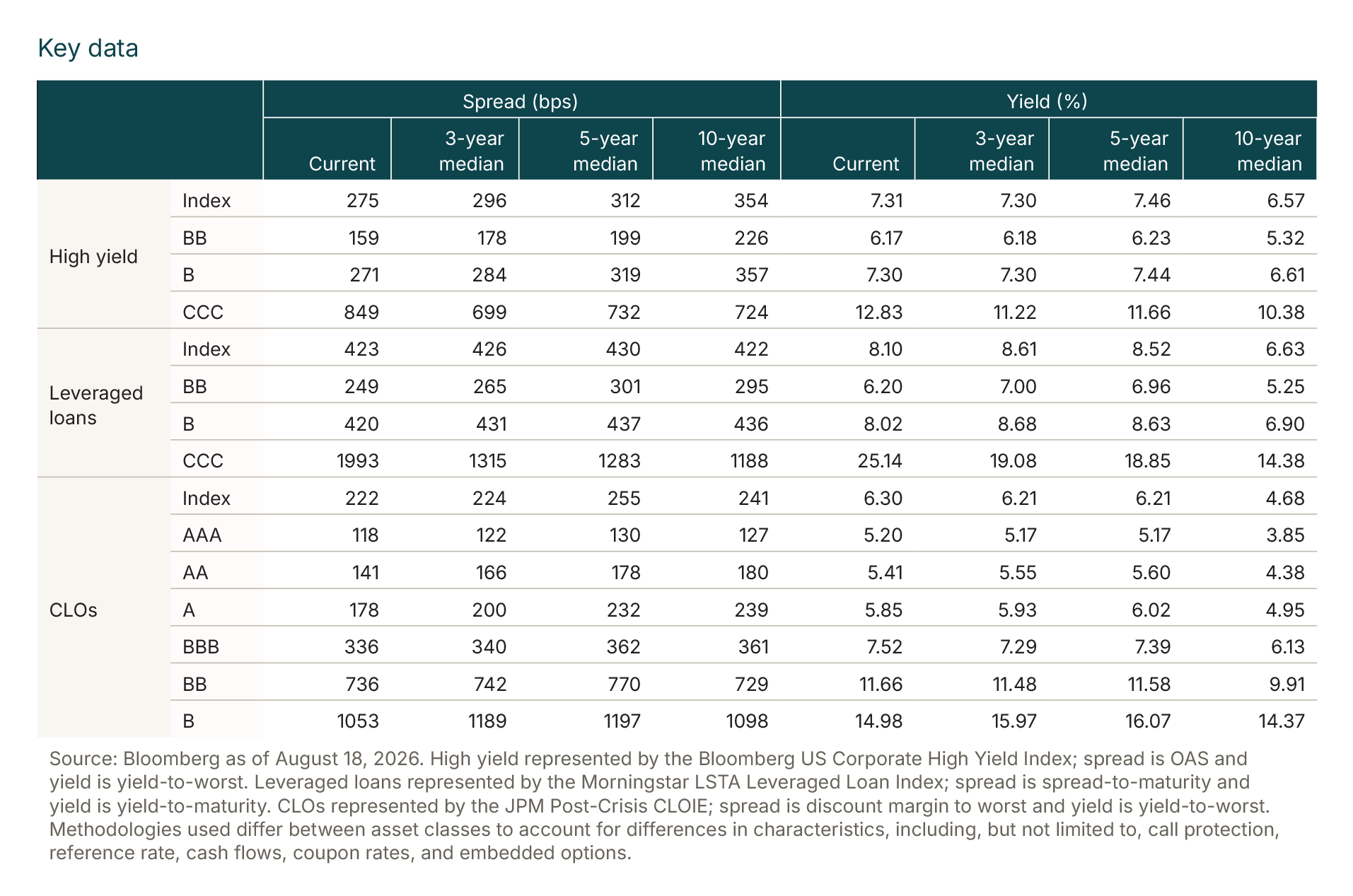
While spreads remain relatively tight, we think relative valuations are reasonable given the lower concentration of issuers vulnerable to AI disruption. Meanwhile, the backup in Treasury rates has made all-in yields attractive.
Despite geopolitical conflict and AI-driven market volatility, high-yield bond issuers continued in the second arter the strong earnings trends of the first. Nearly 3.8x as many issuers beat EBITDA expectations as those who missed.1 On the other hand, many companies reported rising inflationary pressures and have warned of potential tariff impacts. The last-12-month, par weighted default rate was relatively stable in July at 2.77% and 1.97%, with and without distressed exchanges, respectively. Default activity has increased, largely due to a small number of large capital structures rather than a broad weakening of fundamentals. DISH DBS alone accounted for 0.69% of defaults, and even there, bondholders are not expected to experience losses. Spreads are trading at the tighter end of what we would consider to be a fair valuation range, with utilities and energy among the tightest sectors, but weaker segments (communications, transportation, and technology) are still trading wide.
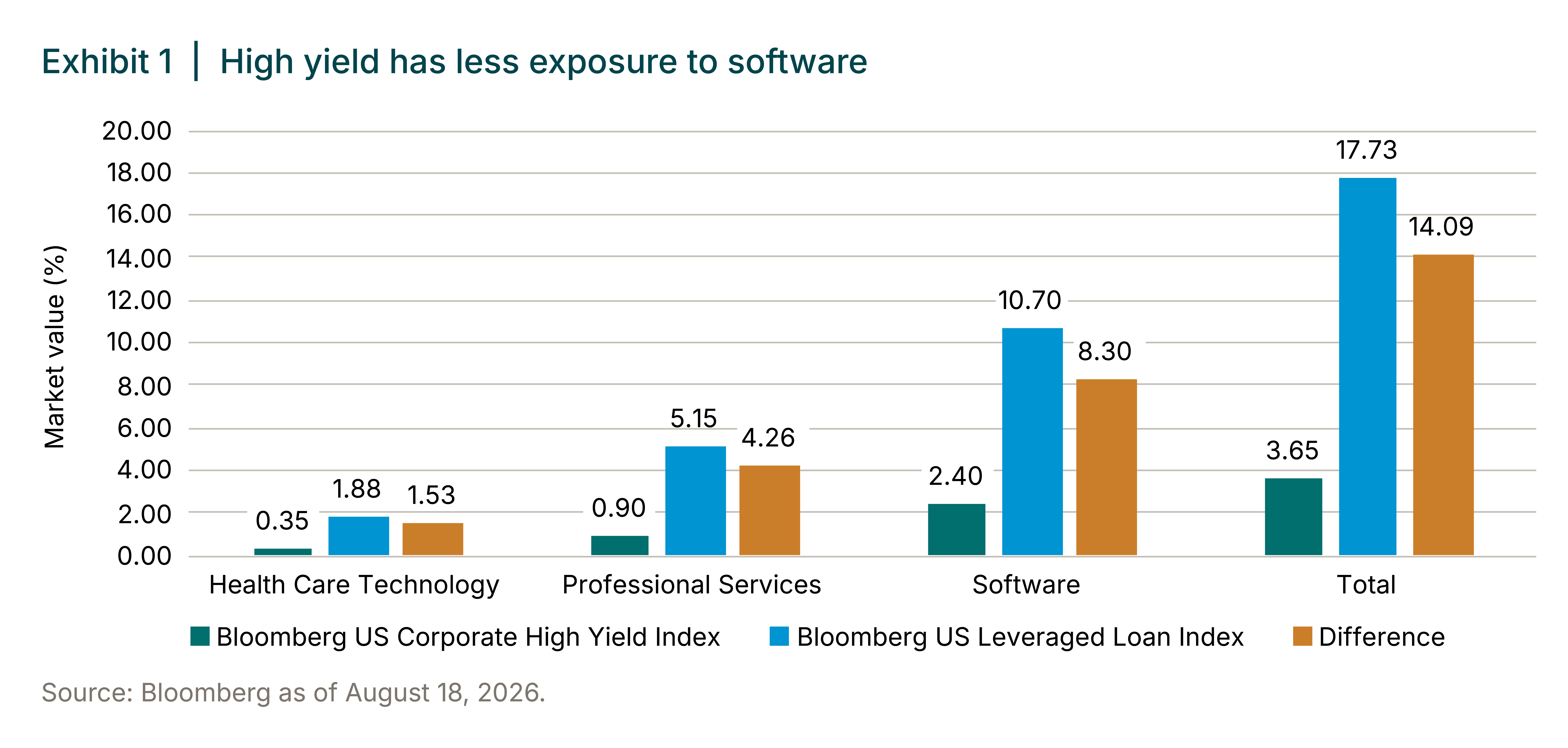
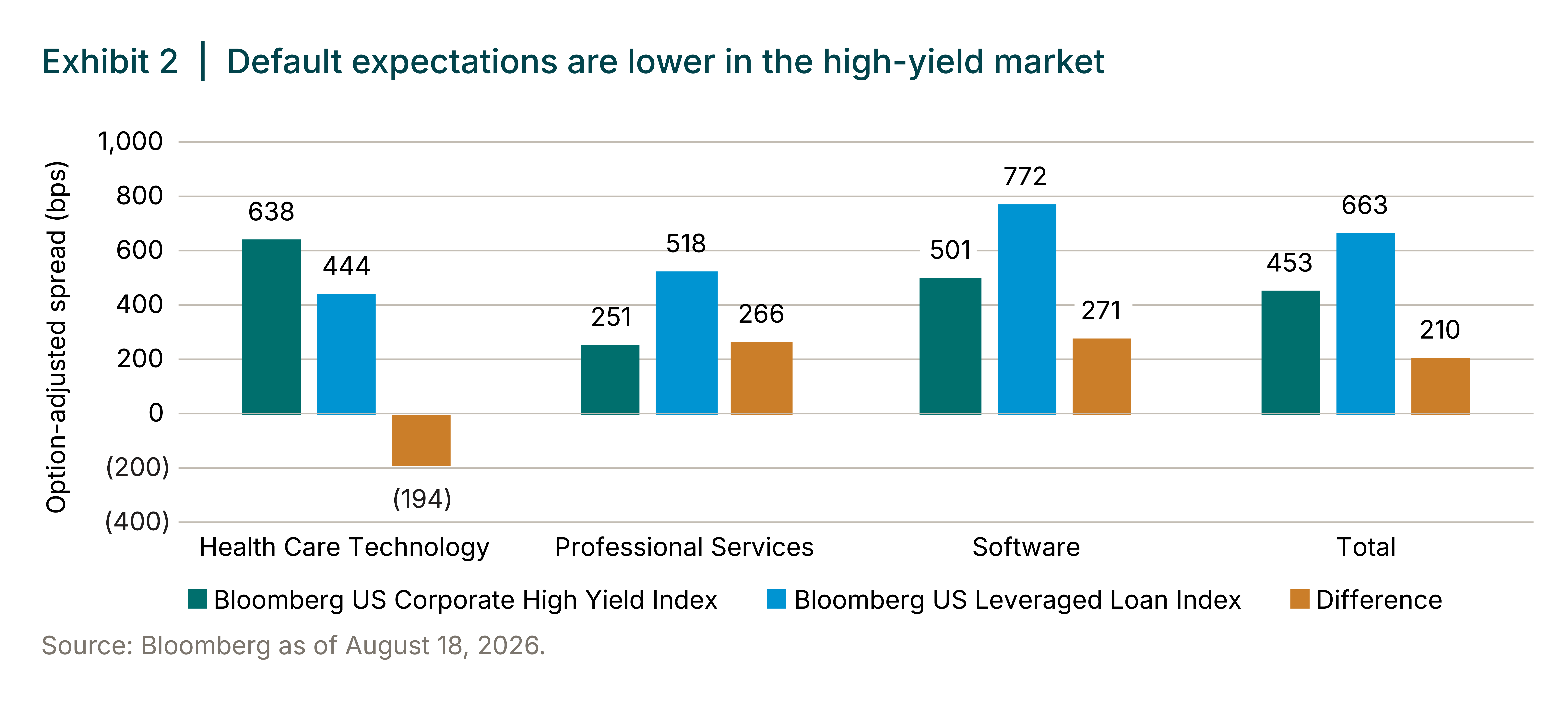
While headline high-yield option-adjusted spreads look compressed, this is partly due to a powerful, decade-long improvement in the fundamentals of the high-yield benchmark index. Highly speculative, high-beta, CCC-rated exposure makes up a small portion of the market, while the number of higher-quality BB-rated bonds has grown to comprise more than half the index weighting. And then there is the previously mentioned contrast with the leveraged loan market in terms of AI exposure. The high-yield market allows for cleaner exposure to tangible, physical layer AI beneficiaries, while the significantly lower concentration of software and tech services companies in the high-yield universe shields investors from the structural valuation decompression and “SaaS-pocalypse” threatening traditional per-user enterprise licensing models (Exhibits 1 and 2).
All-in yields have risen comfortably over 7%, providing an income cushion and an attractive entry point. We continue to view the belly of the high-yield market—specifically low-BB to mid-B rated corporate bonds— as the ultimate sweet spot, bypassing the richest valuations at the top end while avoiding default tail risks. Supported by this powerful combination of high carry and superior quality, we project total returns of 7%-9% over the coming year.
Leveraged loans
Conditions in the leveraged loan market should remain broadly supportive in the near term, though performance is likely to be differentiated across sectors, issuers, and rating categories. While fundamentals remain generally stable and technicals continue to provide a constructive backdrop, elevated dispersion and a gradual increase in distress expectations should place greater emphasis on disciplined credit selection as the primary driver of alpha generation.
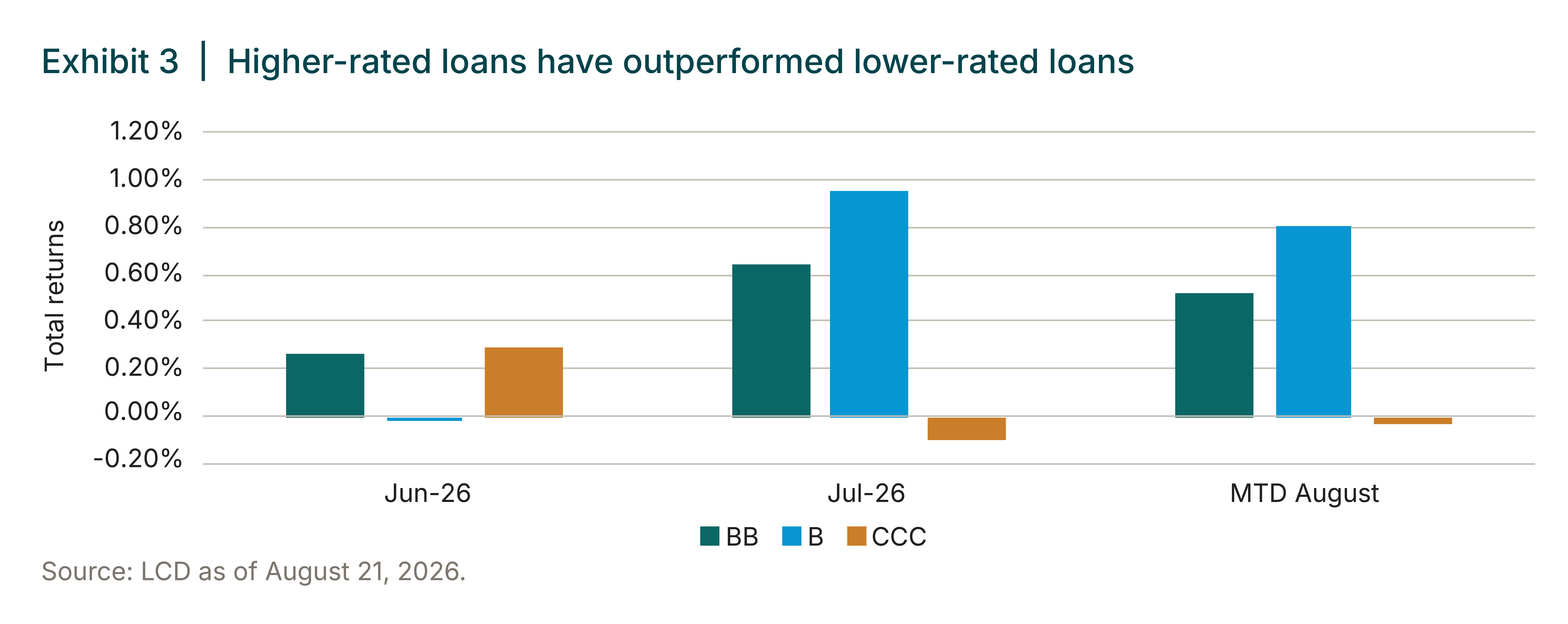
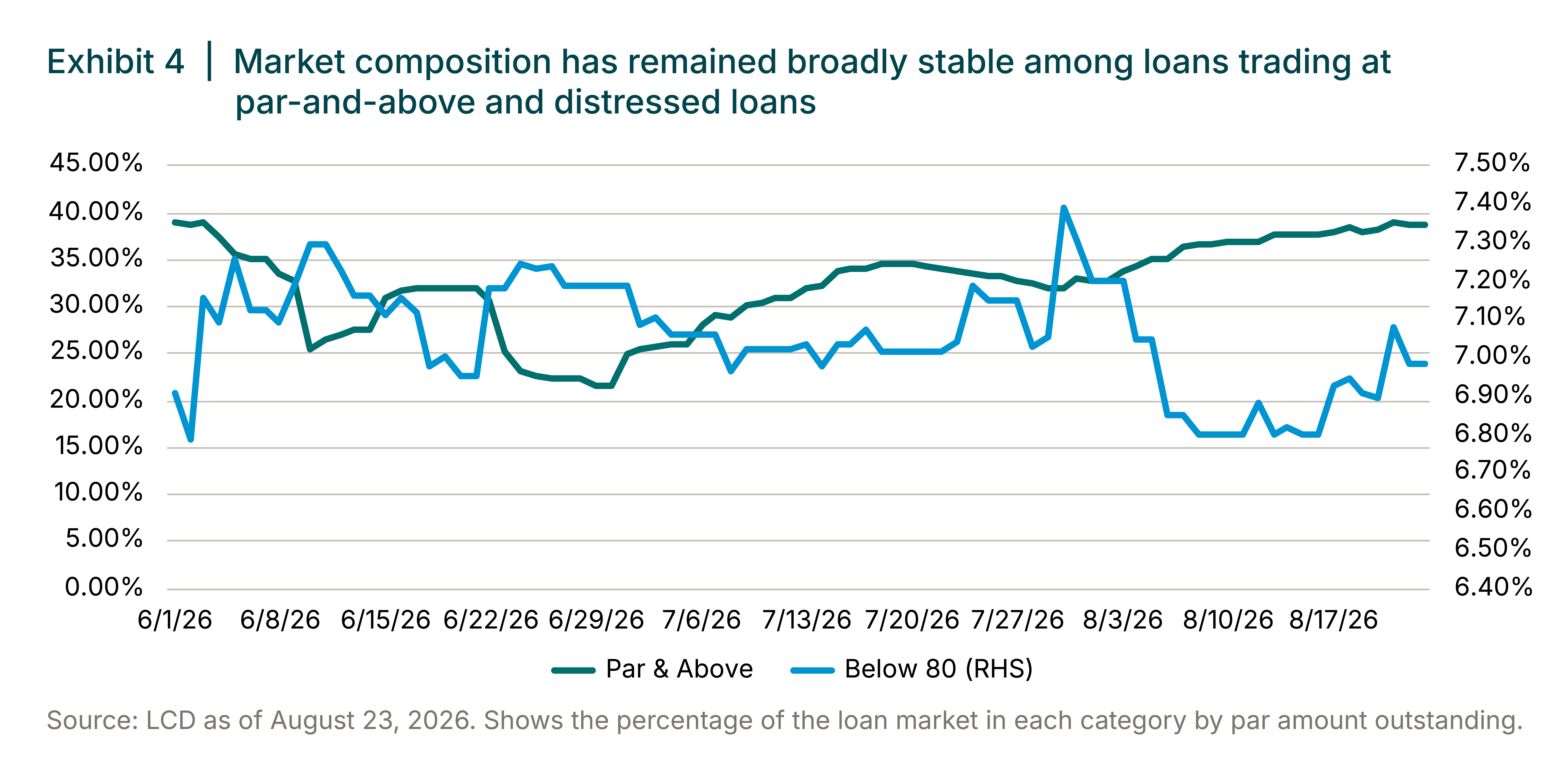
The interplay between resilient corporate fundamentals and ongoing sector- and issuer-specific dispersion is likely to drive market performance in the coming months. Longer-term AI-related risks notwithstanding, recent strength across software and other technology-related sectors has supported higher aggregate loan prices, while select consumer-facing industries have lagged amid pockets of softer economic data. Credit quality trends remain differentiated, with BB- and B-rated loans generally outperforming and CCC-rated credits continuing to underperform (Exhibit 3). Broader measures of market distress have remained relatively stable, including the percentage of loans in the Morningstar LSTA Leveraged Loan Index trading below 80 (Exhibit 4). However, we expect defaults to inflect higher beginning in the fourth quarter, driven primarily by AI-related disruption among weaker software issuers and adjacent sectors. Against this backdrop, we expect rigorous creditselection to be a key driver of alpha generation.
Technicals should remain supportive, though issuance activity is expected to advance only gradually amid ongoing uncertainty surrounding energy markets and interest rate volatility. Borrower activity is likely to remain concentrated in repricing and refinancing transactions, limiting net supply growth and supporting loan prices. CLO formation continues to advance despite persistent arbitrage challenges, while recent retail inflows have provided an additional source of demand. Attractive all-in yields continue to support valuations despite recent spread compression, driven primarily by single-B-rated loans while CCC spreads widened. Although market expectations for additional policy tightening have moderated, the Fed is likely to remain cautious amid energy market volatility, supporting a backdrop of elevated yieldsand continued investor demand for floating-rate assets.
CLOs
While strong domestic demand and supportive technicals continue to underpin the asset class, elevated left-tail risk and tight spreads favor higher-quality tranches. Wider spreads and modest portfolio de-risking are more likely than further spread tightening through year-end.
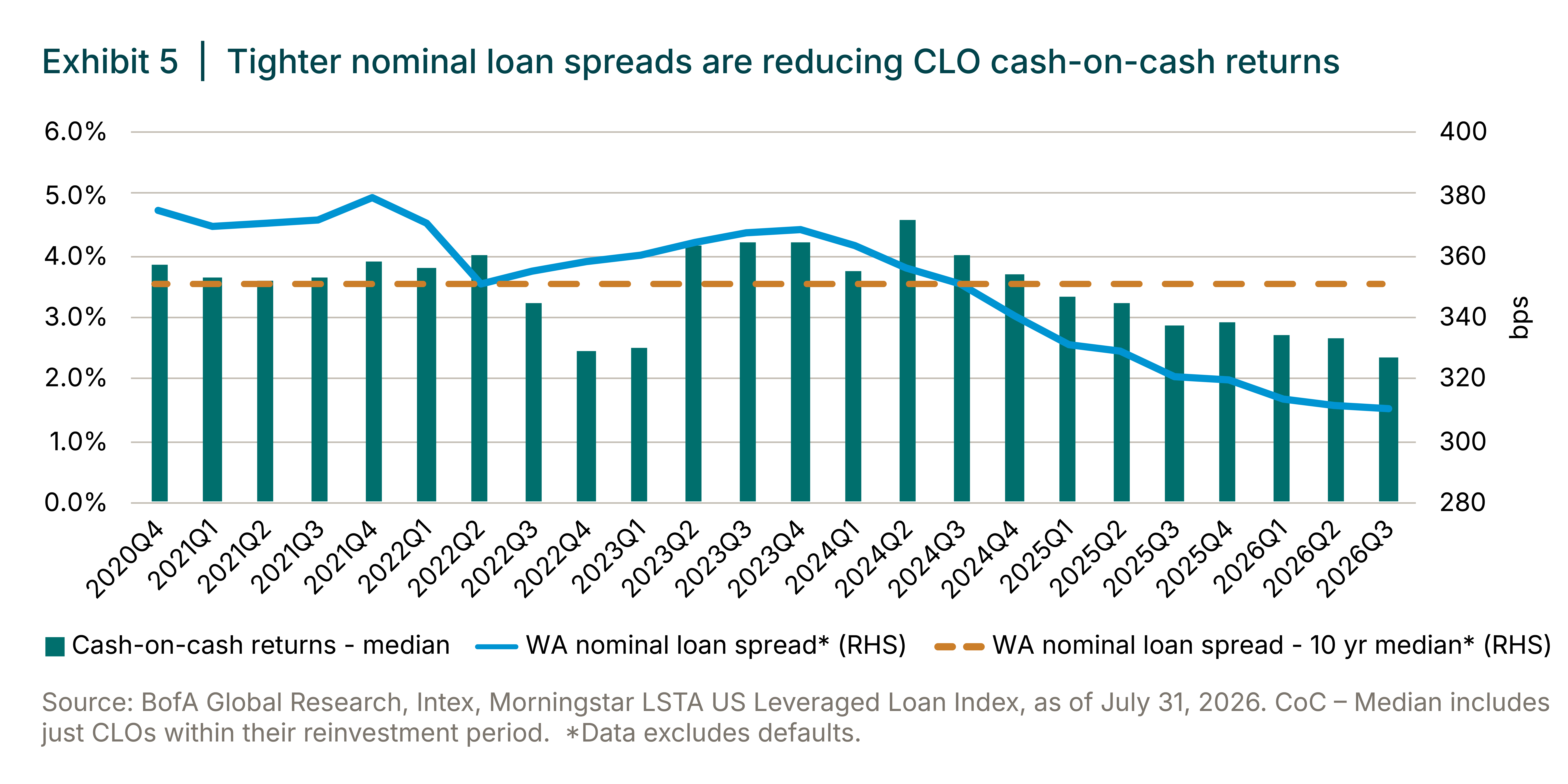
Valuations continue to appear expensive in the wake of spread tightening in the second quarter. All-in yields remain attractive, as the Fed has maintained a hawkish posture at consecutive meetings, but investors are not being adequately compensated for taking on incremental risk, in our view. In addition, CLO managers face the challenge of a highly bifurcated loan market in which performing credits trade at very tight levels, while cheaper opportunities are largely limited to distressed names or credits with deteriorating fundamentals and weak outlooks (Exhibit 5). This dynamic contributed to notional par burn of 3 basis points (bps) in the third quarter–the 15th consecutive quarter of par burn–following 2.3 points of cumulative par losses in 2023 2025. 2The year-to-date outperformance of IG-rated tranches (+2.88%) relative to below-IG (+2.86%) and equity (-7.9% all deals, -5.6% in RP deals) tranches through July reflects concern over downside risk in CLO collateral pools .3 While below-IG tranches had outperformed IG tranches as of late August, increased tail risk in portfolios makes lower-rated tranches susceptible tosharp sell-offs should investor sentiment shift.
On the positive side, CLO market technicals remain very strong, supported by robust domestic demand from insurance companies, asset managers and ETFs. Year to date, CLO ETFs have seen inflows of $14.5 billion, bringing total CLO ETF
assets under management (AUM) to more than $55 billion, with non-ETF investors increasing their CLO holdings by $10 billion. 4 In contrast, Japanese investors currently find CLO paper less attractive. On the supply side, year-to-date U.S. CLO gross new issuance totals $104 billion (BSL $81 billion, MM/PC $23 billion)5, materially lagging 2025 issuance over the same period. However, net CLO issuance is just $30 billion through the end of July 2026, compared to $55 billion through July 2025. 6 Looking forward, refinancing and reset transactions are expected to dominate primary CLO issuance, as the arbitrage for new-issue CLOs remains challengingin today's bifurcated loan market.
While we expect strong demand to continue, left-tail risk in CLO portfolios is elevated. We find tranches higher in the capital stack more attractive on a risk-adjusted basis and anticipate a modest de-risking of portfolios in the fourth quarter. We believe a backdrop of expensive valuations and higher base rates, combined with anticipated higher defaults, makes wider spreads more likely than further tightening through the end of the year.