AI Investment and Pension Discount Rates: Emerging Risk for DB Sponsors
Aug 27, 2026
View available investments in your area

Sorry, we couldn't find any results matching
Please:

Key takeaways
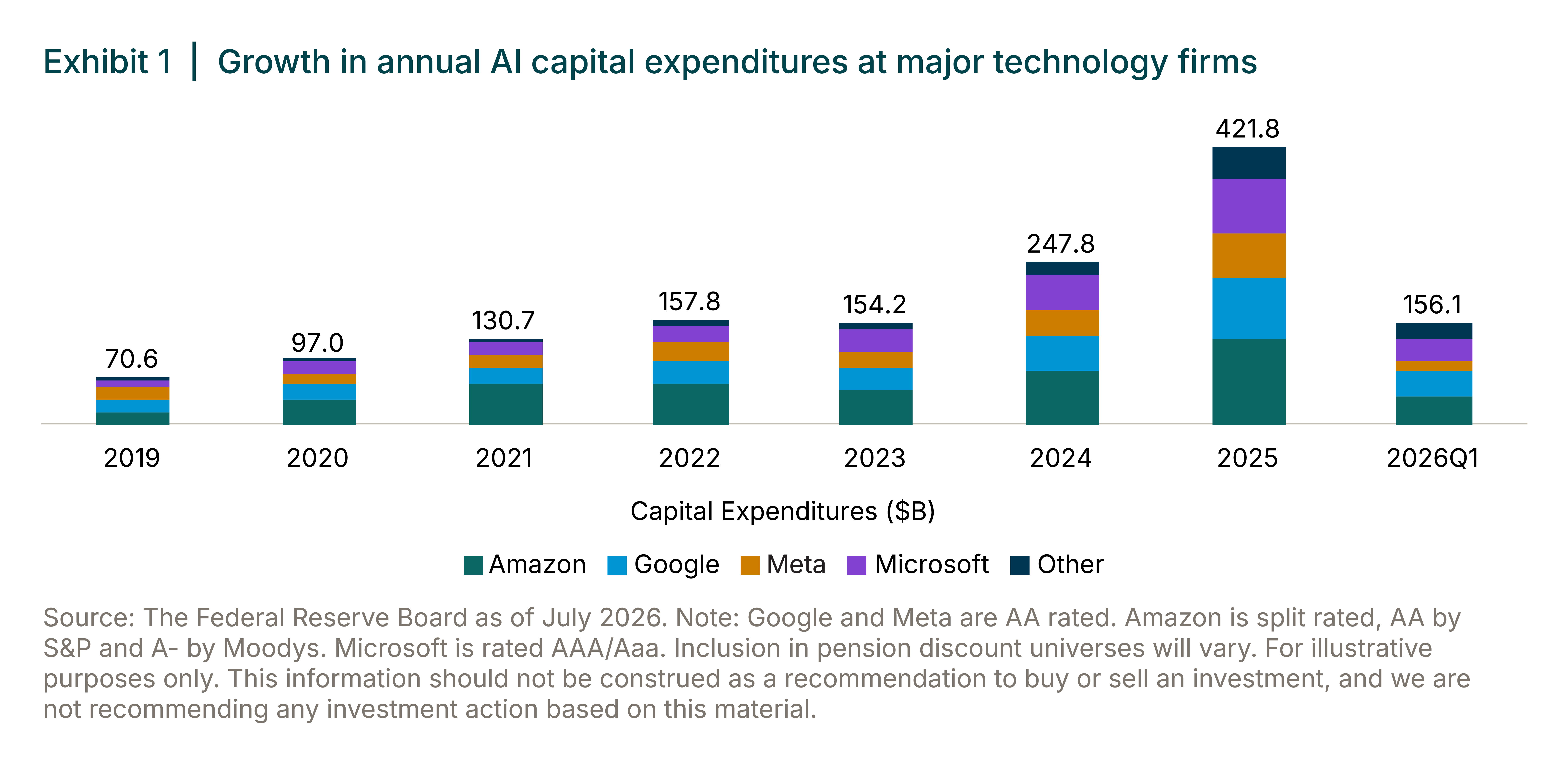
Artificial intelligence has become one of the largest drivers of corporate capital spending in modern history. Technology companies, semiconductor manufacturers, utilities, data center operators and communications infrastructure providers are collectively committing hundreds of billions of dollars to build the computing and power infrastructure required to support AI.
Much of this investment is financed through the investment-grade corporate bond market. Because many AI-related issuers carry AA credit ratings, they increasingly influence the corporate bond universe used to determine pension discount rates. Our objective is to highlight why pension sponsors should monitor this emerging structural change in the composition of the AA corporate bond market as part of their long-term risk management frameworks.
AI Is reshaping the AA corporate bond market
The AI revolution requires enormous investments in physical infrastructure. Data centers, semiconductor fabrication facilities, transmission networks, networking equipment and power generation assets require substantial long-term financing.
As a result, AI-related issuers are becoming increasingly important participants in the AA corporate bond market. If current investment trends continue, these companies may represent one of the largest sector concentrations in the history of the investment-grade market.
For pension sponsors, this matters because the composition of the AA universe—not simply its yield—helps determine the discount rates used to value pension liabilities.
The composition of the AA corporate bond universe matters
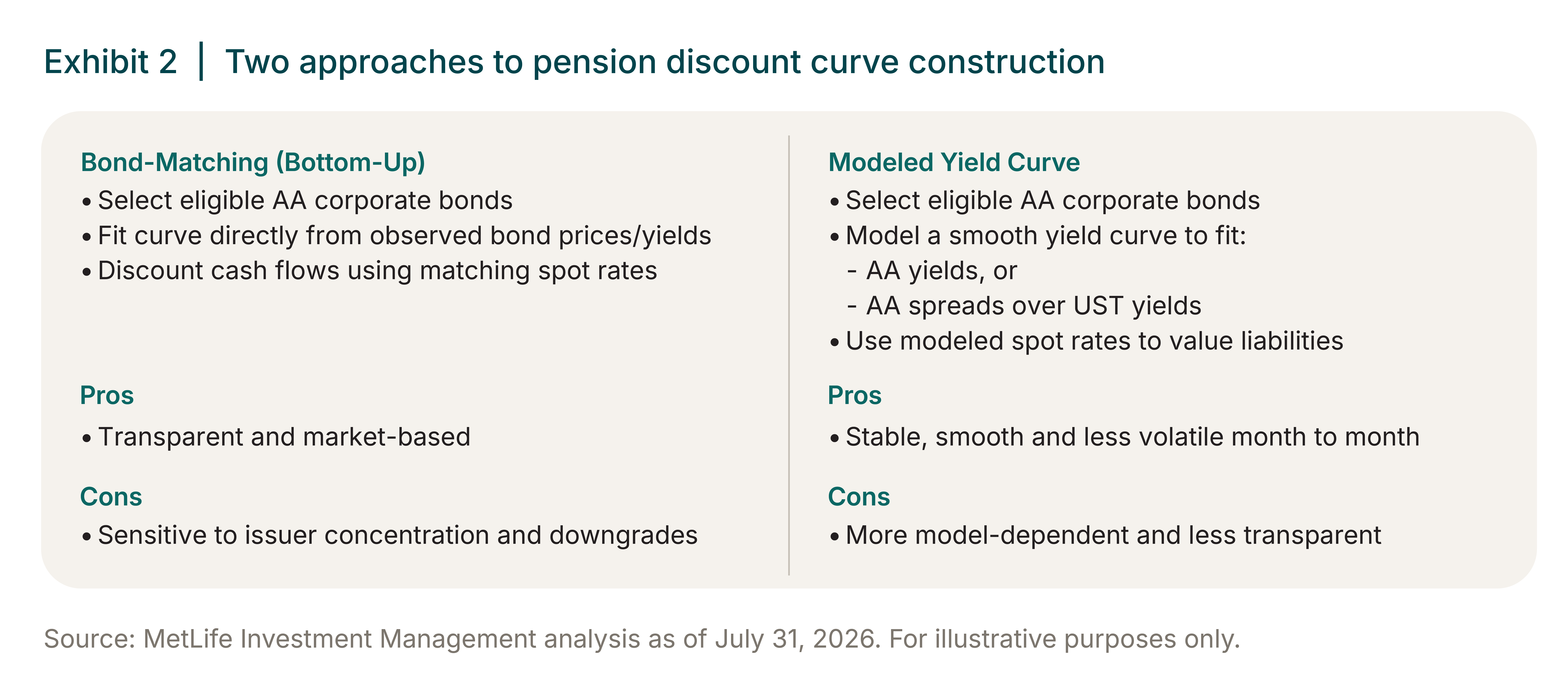
Pension sponsors often think of discount rates primarily as a function of interest rates. In reality, pension discount curves are constructed from yields on AA-rated corporate bonds, making the composition of the AA market an important consideration. Changes in issuer mix, sector concentration and credit quality can influence discount rates even when Treasury yields remain stable. Exhibit 2 shows two ways pension funds use AA bonds to construct discount curves.
The growing concentration of AI-related issuers introduces a new structural consideration. As these companies become a larger part of the AA universe, developments affecting their credit quality could have broader implications for pension funding than they would have in previous decades.
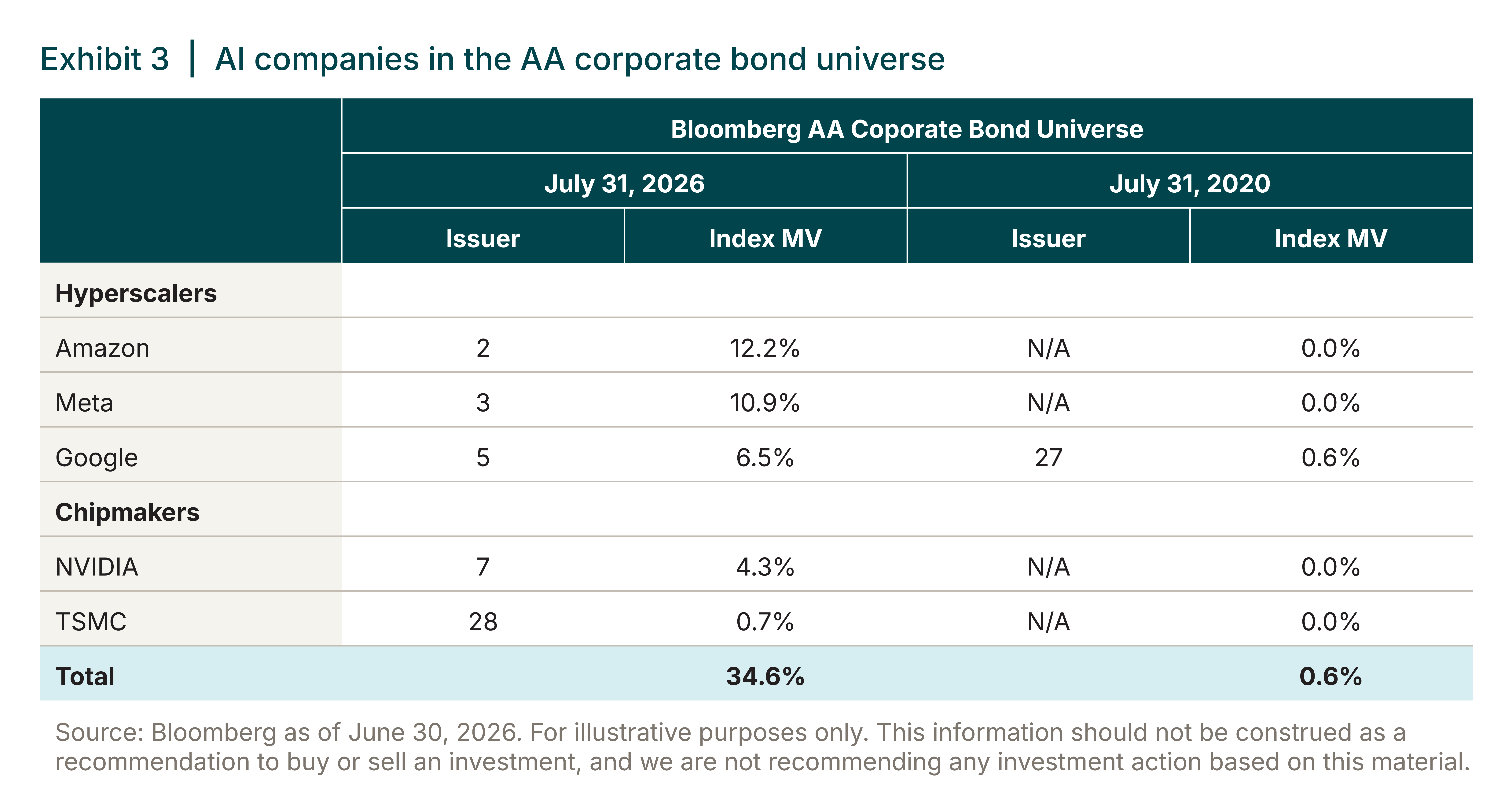
Companies with significant AI-related corporate debt issuance comprise more than one-third of the Bloomberg AA Corporate Bond universe (Exhibit 3), and hyperscalers comprise three of the top 10 issuers in the index.
We highlight this point not necessarily because we predict credit quality in these names will deteriorate. Rather, we wish to underscore the importance of understanding how concentration within the benchmark may influence pension liabilities.
Lessons from the 2012 bank downgrades
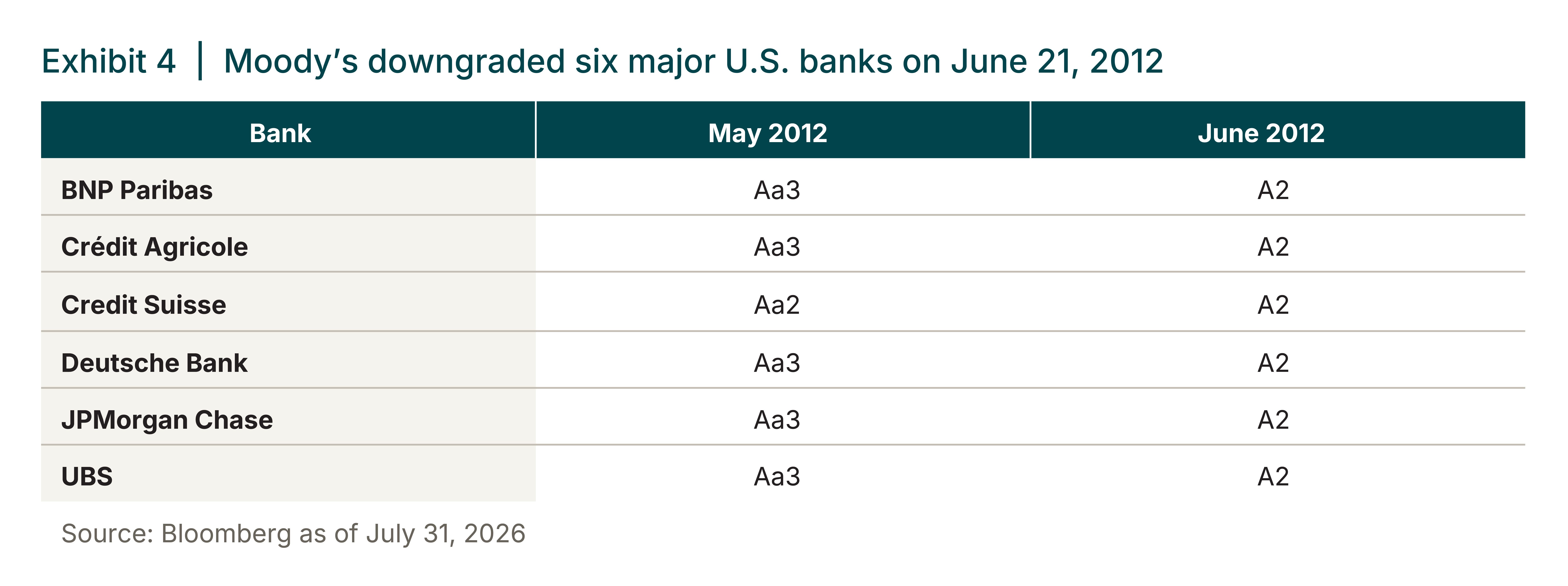
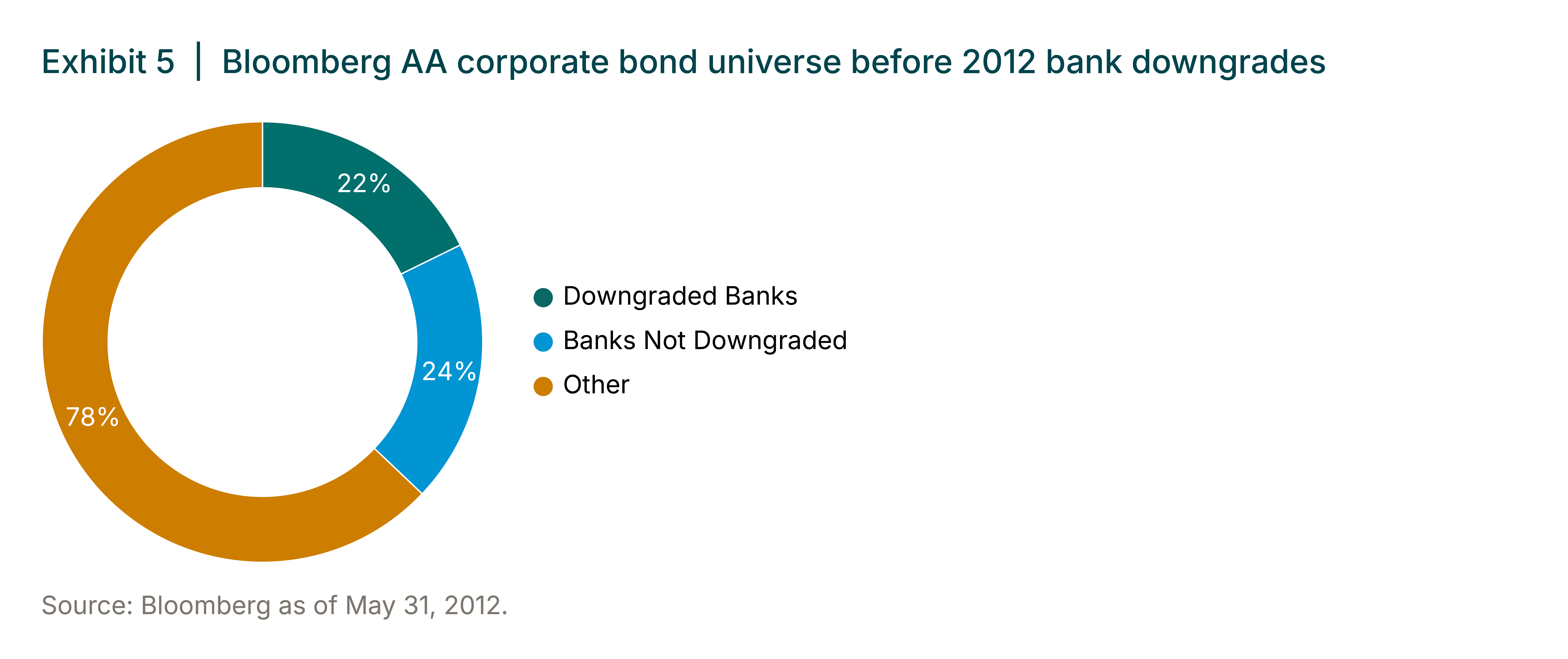
To understand how downgrades to names that account for an outsized portion of the market can affect pension discount curves, we look to a relevant historical precedent: a downgrade cycle that affected major global financial institutions in 2012 and 2013 (Exhibit 4).
The removal of six large banks from the AA universe materially altered the corporate bond market used to construct pension discount curves. Many plan sponsors experienced changes in discount rates driven by changes in the underlying bond universe itself.
Two of the six banks downgraded from AA in June of 2012 were included in the Bloomberg AA Corporate Bond universe. Together, BNP Paribas and JPMorgan Chase comprised 22% of the market value of the index as of May 31, 2012.
The AI investment cycle is fundamentally different from the financial crisis. Nevertheless, both periods illustrate the same principle: Structural changes in the composition of the AA corporate bond market can have meaningful consequences for pension liabilities.
Potential implications for pension funding
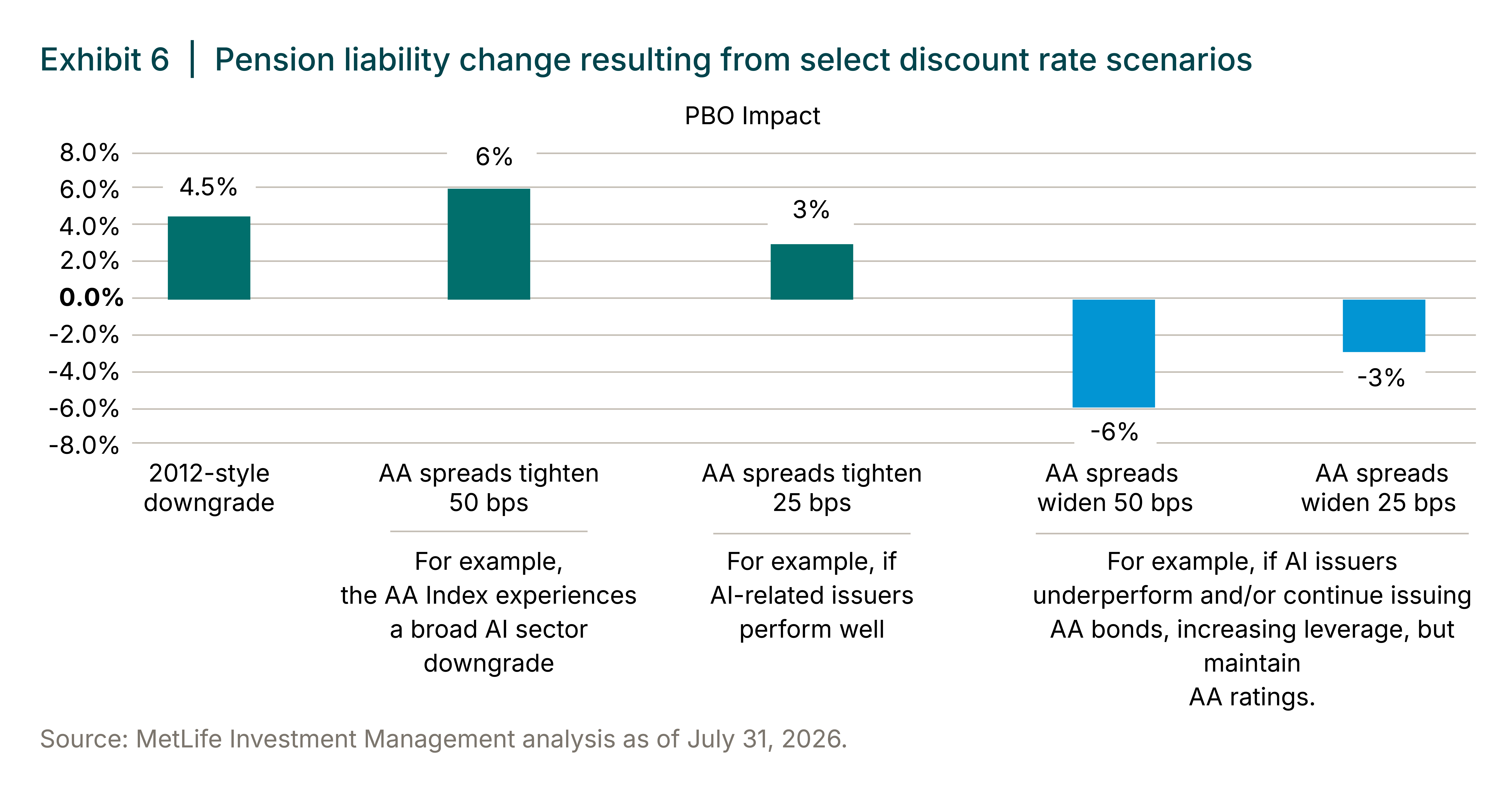
If AI investments generate strong returns, today’s issuers may retain exceptional credit quality while becoming an even larger portion of the AA corporate bond market. Ironically, this may tighten their credit spreads, decreasing funded ratios on the margin.
Alternatively, some companies may experience higher leverage, resulting in selective downgrades over time. Spread-widening in this scenario would increase funded ratios on the margin. A less likely but more consequential outcome would involve broad credit deterioration among AI-related issuers similar to the bank downgrades of 2012 following a period of sustained overinvestment (Exhibit 6).
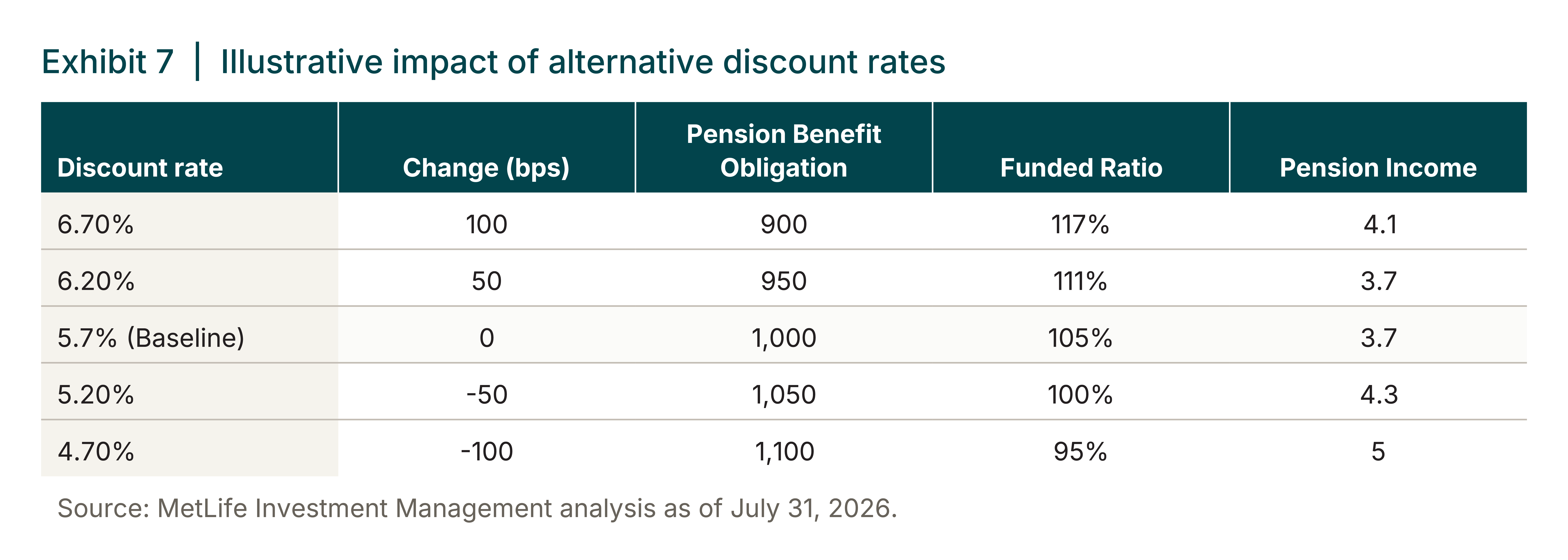
Although no one can predict which outcome will occur, pension sponsors should recognize that each scenario has different implications for discount rates, projected benefit obligations and funded status (Exhibit 7). Pension income would remain relatively unchanged.
Conclusion
Artificial intelligence is having broad market impacts, including the structure of the corporate bond market. As AI-related issuers become an increasingly important component of the AA corporate bond universe, pension sponsors should recognize that changes in the composition of that market may become an additional source of funding risk.
Interest-rate risk has long been central to pension risk management. The structural evolution of the AA corporate bond universe may deserve comparable attention.