
Smaller Fed, Bigger Questions
Aug 26, 2026
Key takeaways
Federal Reserve (Fed) Chair Warsh’s balance sheet task force has the stated goal of examining “the costs, benefits and institutional implications of the Fed’s current balance sheet regime.”1
The leaders of the task force have varying philosophies regarding the balance sheet. Jeremy Stein favors a large balance sheet. Raghuram Rajan has written extensively about the problematic ratcheting effects of quantitative easing and prefers a smaller balance sheet. Karen Dynan, the third member, has less apparent views as she has not written much about balance sheet questions directly. The task force is supposed to finish its work and make recommendations by the end of the year, so any changes will likely take place beginning in 2027.
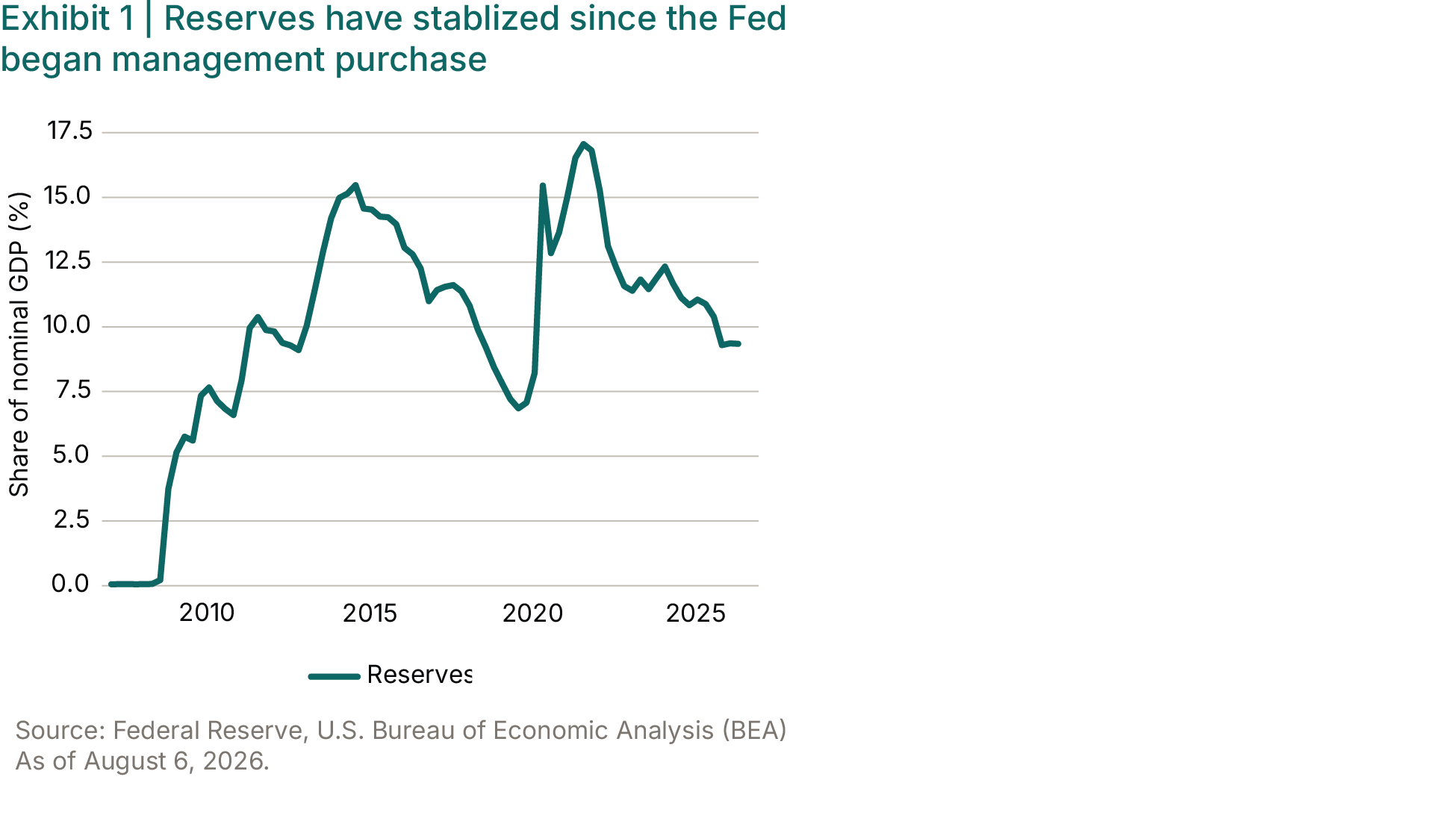
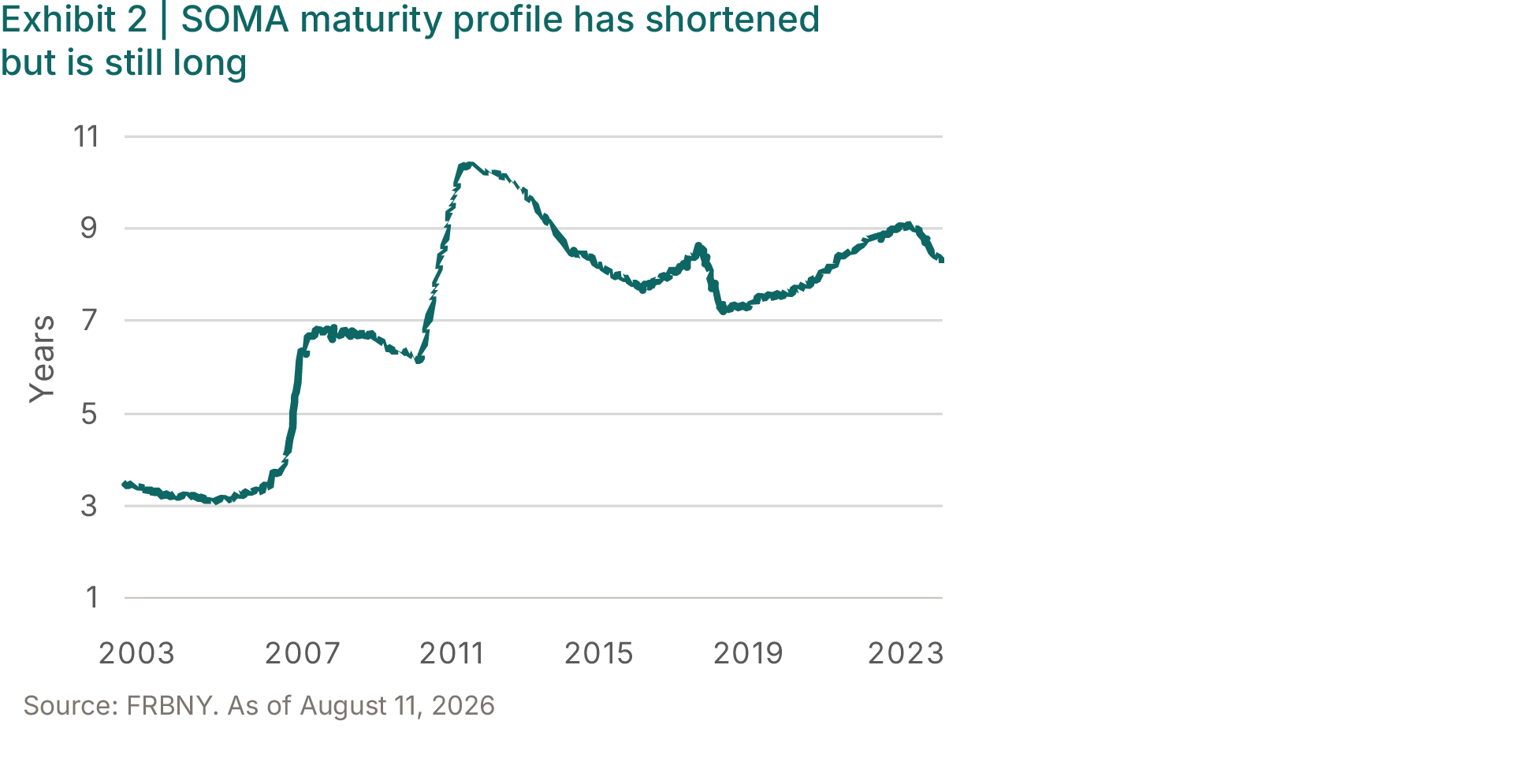
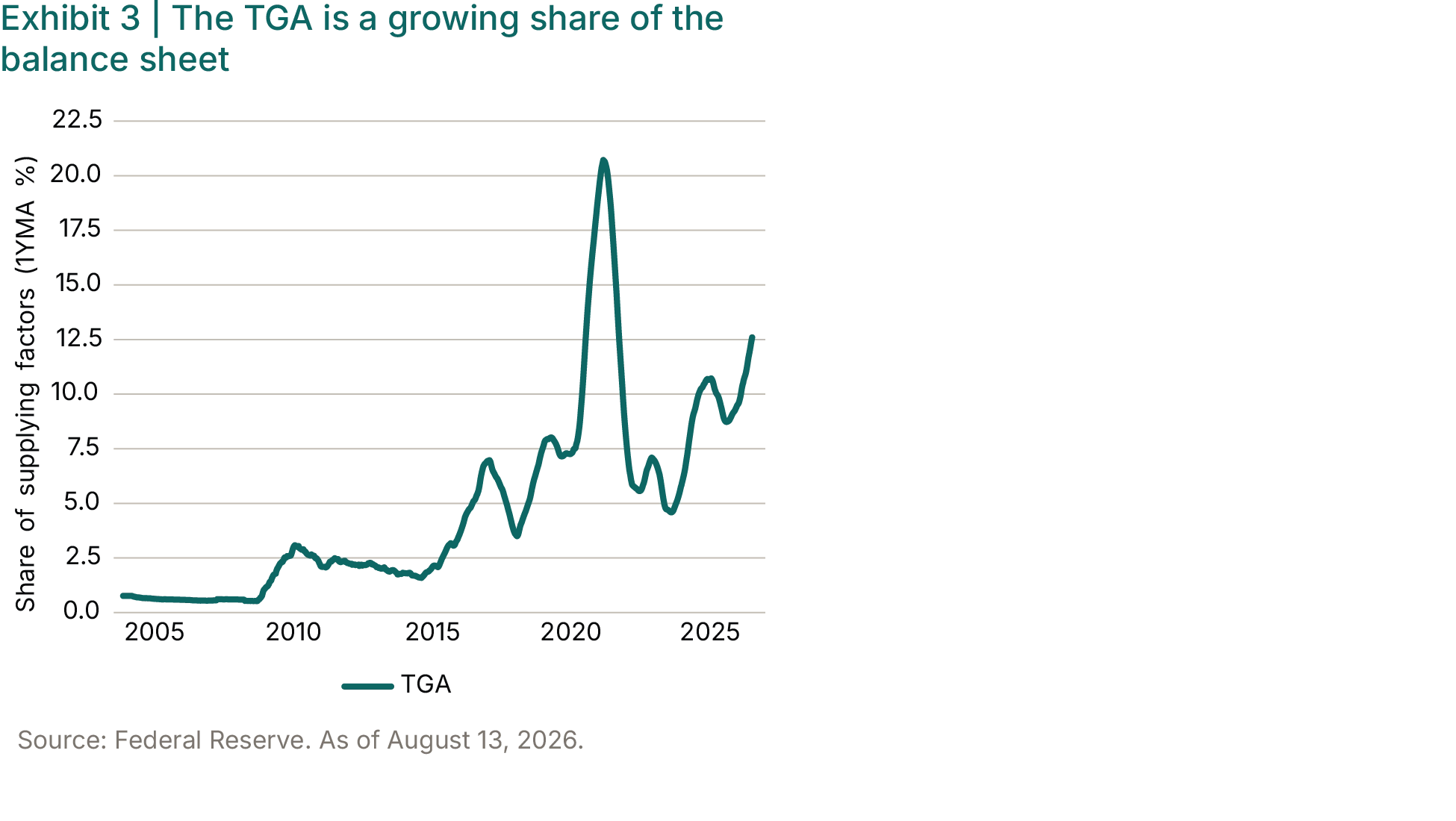
The task force could emerge with any one of a broad range of recommendations. We discuss three important aspects of the balance sheet they will likely consider.
| U.S. | 2025† | 2026 | 2027 |
|---|---|---|---|
| GDP (avg. annual % chg.) | 2.1 | 2.4 | 2.4 |
| CPI (Dec. Y/Y % chg.) | 2.7 | 3.4 | 2.2 |
| 10-Year Treasury (EoP %) | 4.17 | 4.50 | 4.50 |
| Policy rates (upper bound, EoP %) | 3.75 | 3.75 | 3.75 |
| Unemployment (EoP %) | 4.4 | 4.3 | 4.3 |
Sources: BEA (GDP), BLS (CPI, Unemployment), Federal Reserve (10-Year Treasury and Policy Rates), MIM. As of August 2026.
† Italics denote 2025 actuals.
In August, we revised our forecast to incorporate both the economic effects of the AI investment boom and the continuing Iran conflict. For growth, we revised our 2026 forecast higher from 2.2% to 2.4%, given continued investment strength. For inflation, we increased our CPI forecast from 3.0% to 3.4%, largely a “mark-to-market” adjustment of headline inflation, given oil prices remained higher for longer than we initially expected. We continue to expect subdued core inflation. Despite weak payrolls growth, the unemployment rate remains low, and we expect this to continue at least through the end of the year.
Even with higher growth and higher inflation, we expect the Fed to remain on hold for the remainder of the year. Some tightening may take place via the balance sheet, and Chair Warsh also seems happy to let markets do some work in the form of higher long-term rates. Markets have continued to price in at least one hike by year-end, which appears to come from emphasizing the effects of oil prices. We see this as overdone.
Risks
In our previous monthly, the biggest risk to our outlook was the Iran war going on longer than initially expected and the resulting impact on oil prices also lasting longer. That risk came to pass, and we ended up revising our inflation forecast again.
The labor market getting significantly worse is a main risk to our baseline outlook. Even though payroll growth has been negative for just one month (July) so far, growth has been smaller each month since the start of the second quarter. Labor force participation has also dropped. The labor market is in a softer place than it was six months ago, even though the unemployment rate has been stable. We would expect the Fed to keep rates on hold unless there is a sudden and sharp deterioration in the labor market.