Global Environmental Policy Statement
For information on our environmental priorities and programs, please read MetLife’s Environmental Policy Statement.
As a financial services company, we recognize that environmental challenges can affect the well-being and financial future of our customers, our people and our communities. We manage and monitor climate and other environmental risks, impacts and opportunities while supporting solutions that advance the transition to a low-carbon economy.
MetLife is working to increase efficiencies, reduce risks and deliver sustainable growth across our global operations. We continue to promote energy efficiency and implement green building practices.
Climate Approach
At MetLife, we have been helping people protect their families, finances and futures since 1868. Climate change poses a risk for our stakeholders, and because of this we are working toward identifying solutions and building resiliency in a changing world. Our Net Zero ambition aims to reduce the environmental impact of MetLife’s global owned and leased offices and vehicle fleets, employee business travel, supply chain and certain assets in MetLife’s general account (GA) investment portfolio, which includes the general accounts of MetLife, Inc.’s wholly owned insurance company subsidiaries.1
For information on our environmental priorities and programs, please read MetLife’s Environmental Policy Statement.
Review our latest responses to SASB, TCFD, GRI, and UN Global Compact Indices and see our GHG Inventory Assurance letter.
Learn more about MetLife's ambition for Net Zero emissions by 2050.
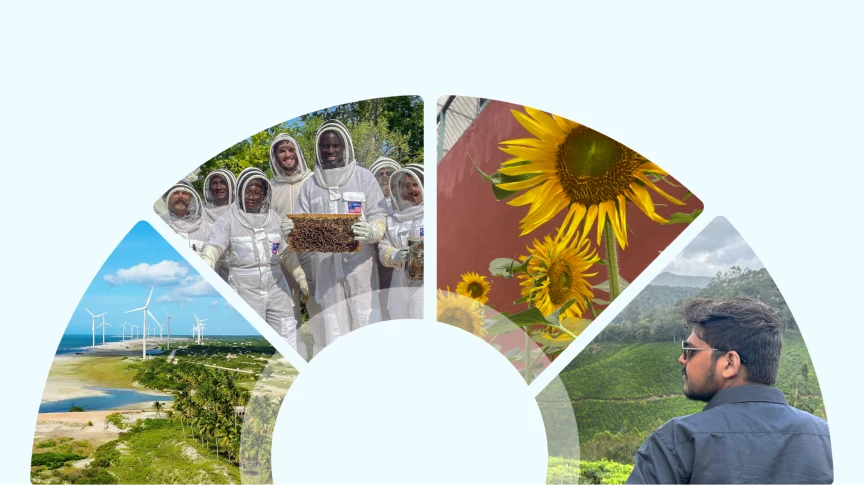
MetLife's commitment to environmental stewardship and responsible resource management includes initiatives and programs that protect and enhance nature, plants and animals, including biodiversity and healthy ecosystems. MetLife aspires to plant 5 million trees by 2030, prioritizing areas vulnerable to natural disasters. We undertake this aspiration, in collaboration with our customers, employees and other stakeholders, to help reduce carbon emissions in the atmosphere, enhance biodiversity and help reforest areas that have been affected by deforestation and natural disasters, including hurricanes, floods and wildfires.
We also support nature and biodiversity by protecting pollinators and installing beehives at corporate and investment properties, originating investments that support biodiversity and healthy ecosystems and by partnering with third-party-certified carbon offset projects that represent a specific volume of emissions reductions while empowering local economies.
In response to California’s Voluntary Carbon Market Disclosures Act (Assembly Bill 1305), the below information is provided on behalf of MetLife, Inc.:
In June 2022, MetLife announced its Net Zero greenhouse gas (GHG) emissions aspiration for global operations and MetLife’s general account investment portfolio by 2050 or sooner.1 Read more about our Net Zero aspiration, including details on our interim targets.
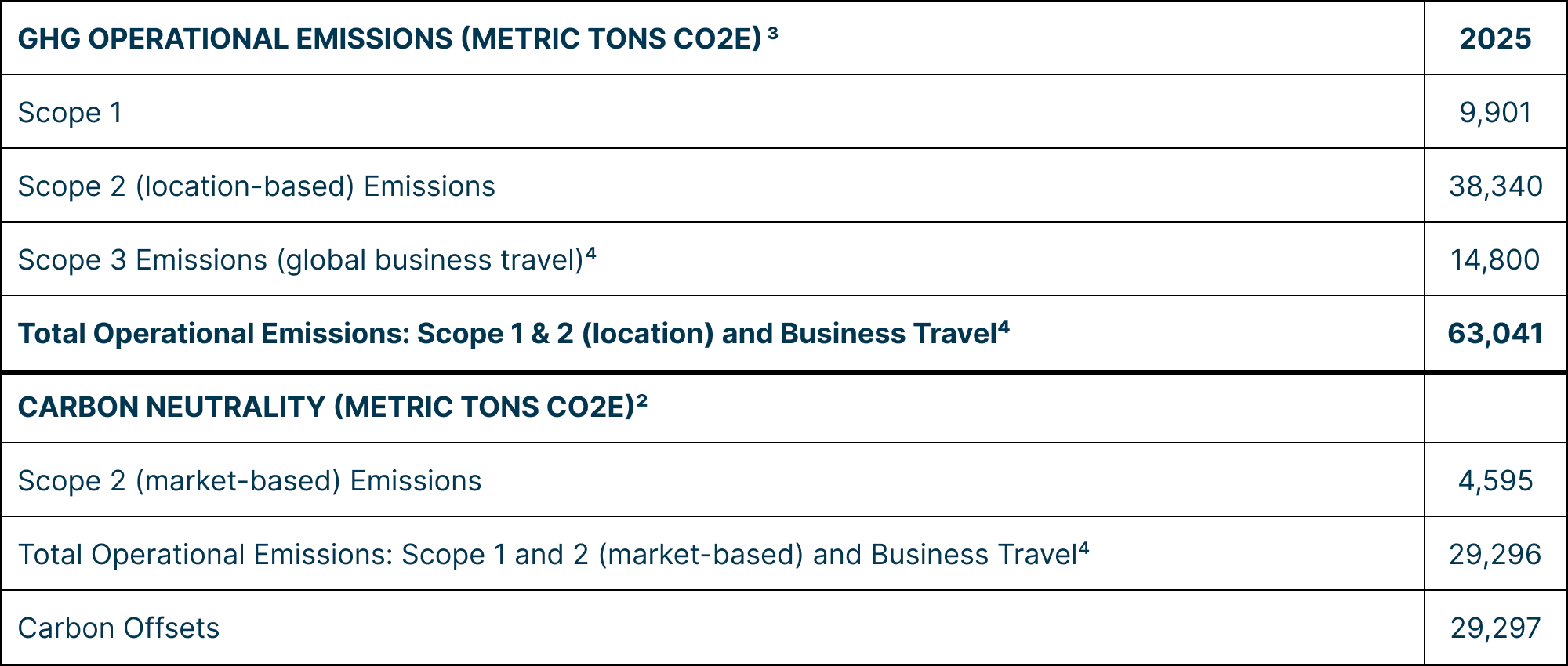
In 2016, MetLife achieved carbon neutrality across our global corporate office portfolio, vehicle fleets and employee business travel, and has maintained carbon neutrality each year since.2
For additional information on MetLife’s 2025 carbon neutrality and GHG emissions,3 please see MetLife's latest Sustainability Report (including Sustainability and New Frontier, Reducing Our Environmental Impact and our Sustainability Scorecard (relating to Environmental Data), and related footnotes) and additional information relating to MetLife’s carbon offsets available under the “Carbon Neutrality” dropdown on this page.
The following chart provides information about the project-based carbon offsets applied by MetLife, Inc. in 2025:

For additional information on MetLife’s 2025 carbon neutrality and GHG emissions, please see MetLife’s latest Sustainability Report (including Sustainability and New Frontier, Reducing Our Environmental Impact, our Sustainability Scorecard (relating to Environmental Data) and related footnotes).
Climate risks, both physical and transition risks, could impact MetLife’s business operations, investments, customers and supply chains.
We consider how MetLife could be impacted by climate risks across the business, both assets and liabilities, by evaluating how risks could manifest across risk types, including: credit, market, insurance, operational, legal and compliance risks. We have conducted qualitative climate risk identification exercises to determine potential climate risks for key parts of the organization. In addition, we have reviewed our organizational structure to identify roles and responsibilities in relation to climate risk management across the Three Lines of Defense model.
MetLife continues to explore quantitative assessment and scenario analysis methods to advance our understanding of climate risks and the potential impacts on our business, strategy and financial planning. While climate risk modeling is still a nascent field with many limitations, we continue to experiment with various approaches.
Learn more about our governance and risk management in our latest Sustainability Report.
At MetLife, we recognize that deforestation is a critical issue leading to biodiversity loss and climate change. MetLife and MetLife Foundation work to conserve, restore and grow trees through a number of programs, including by providing financial support to large-scale reforestation programs, community tree distribution and urban tree planting projects. To further support reforestation and conservation, MetLife also purchases nature- and biodiversity-focused carbon offsets, provides support to environmental organizations and purchases sustainably sourced paper certified to Forest Stewardship Council and the Sustainable Forestry Initiative, when feasible.
MetLife and MetLife Investment Management, LLC and certain of its affiliates (MIM) are proud of the role we play supporting sustainable forest management and timber production within MetLife's general account investment portfolio and MIM clients’ investment portfolios. This can include collateral acreage with the following certifications at origination: Forest Stewardship Council (FSC), Programme for the Endorsement of Forest Certification (PEFC), American Tree Farm System (ATFS), and Sustainable Forestry Initiative (SFI).
Every year, thousands of MetLife employees participate in our voluntary employee engagement program to support environmental stewardship, called Our Green Impact. The programs offer employees on-site and virtual environmental education and volunteer opportunities that enable our people to reduce their environmental impact at work, at home and in their communities.
As one example, during the annual MetLife Extraordinary Litter Pickup, employees around the world pick up trash to support the communities where they live and work. In addition, our office-based volunteer green teams and climate champions for each business function and region help drive global progress.
Our approach to EHS, as outlined in MetLife's Environmental Policy Statement, is built on the collaboration of employees and business partners who champion environmental stewardship, engage in environmental awareness activities, and uphold standards and procedures designed to prioritize our employees’ health and safety while at work, including protecting individuals at our offices from potential health hazards and injuries. The environmental sustainability measures implemented in our offices and operations achieve the additional benefit of providing our people with healthy spaces where they can thrive.
We use sustainable materials and design in our buildings and provide high levels of indoor air quality and natural light and amenities such as bike storage, healthy dining options and sit-stand desks. In addition, we encourage our employees to prioritize health by connecting our purpose and our work with the importance of overall well-being. We have a global initiative known as BeWell, providing resources to help employees with resilience and coping, mental health, maintaining physical and financial well-being, and building healthy relationships.
Learn about green investments, which are focused on the conservation of natural resources, the production and discovery of alternative energy sources, the implementation of clean air and water projects, and other environmentally conscious business practices, in MetLife's General Account investment portfolio.5
MetLife implements sustainability best practices in global offices through sustainable design, capital projects and facility upgrades. We also use efficient technology to reduce our facilities’ carbon footprint, drive operational excellence and bring employees together in state-of-the-art collaborative workspaces. These projects focus on driving energy savings, emissions reductions, water efficiency, waste diversion and operational cost savings. Examples include lighting retrofits, chiller and boiler replacements, LED lighting systems, demand metering and lighting sensor installations. As we continue to realize the benefits of green buildings, we aim to design new global workspaces to Leadership in Energy and Environmental Design (LEED) standards or other green and healthy building certifications, where feasible.
MetLife is committed to reducing the GHG emissions associated with employee business travel and incentivizes employees to make sustainable travel decisions in their personal lives.
Fleet Efficiency
We have improved our fleet efficiency by embracing hybrid and electric vehicles. As part of our carbon neutrality efforts, we offset the remaining emissions associated with our fleet through support of renewable energy instruments and carbon-reduction projects in markets where we operate.
Sustainable Travel
MetLife encourages our employees to make sustainable choices when commuting and traveling for business. MetLife incentivizes sustainable choices by offering electric vehicle charging stations as a free amenity at many of our major U.S. offices, designing offices with sustainable travel in mind (such as offering bike storage) and through pre-tax commuter benefits for public transportation. In addition, MetLife employees are encouraged to reduce business travel by taking advantage of telepresence and virtual meeting tools when possible and, when travel is essential, to make sustainable choices. These can include choosing public transportation when feasible, carpooling with coworkers, combining two trips into one and flying in premium economy instead of business class on long-haul flights. In addition, as part of our aspiration for carbon neutrality,2 MetLife offsets business travel emissions.
For years, MetLife has applied a range of strategies to manage and reduce emissions generated by its operational footprint. We are proud of our history of environmental stewardship through education, engagement and setting and achieving climate aspirations, including being the first U.S. insurer to commit to carbon neutrality for our offices, fleet and business travel in 2016.2 Since then, we have maintained carbon neutrality every year while making continued reductions in energy consumption and GHG emissions. In 2022, we outlined our approach to Net Zero emissions for MetLife’s global operations and general account investment portfolio by 2050 or sooner.1 Our framework for Net Zero outlines our progress on emissions reductions, 2030 interim targets and other key initiatives to help drive positive climate impact. To reduce emissions, we continue to seek and implement energy efficiency and green building practices, analyze and manage data center operations, support sustainable travel strategies and improve performance as energy demands rise.
As part of our broader efforts to transition to a low-carbon economy, MetLife supports the renewable energy market in the regions where we operate. Since 2009, we have procured renewable energy by purchasing Energy Attribute Certificates—issued when one megawatt-hour of electricity is generated and delivered to the electricity grid from a renewable energy resource. We purchase Renewable Energy Certificates, including Green-E certified products in the U.S., to support the growth of the renewable energy market. In Madrid, Spain and Nicosia, Cyprus, we generate on-site renewables through solar arrays. We continue to explore options for on-site renewable generation at other sites, while working with energy providers and landlords across our markets to source green energy. For data on renewable energy purchasing, please read our latest Sustainability Report.
Our Supplier Inclusion and Sustainability Program engages suppliers on climate action, as well as principles of corporate responsibility and ethical sourcing, throughout the procurement process. Among other things, we request sustainability information during the supplier onboarding process, encourage continuous improvement and incentivize suppliers to reduce GHG emissions and negative environmental impacts in their operations.
Through supplier engagement, we expand our understanding of our suppliers' business goals and performance and foster a culture of transparency and collaboration. By 2030, we aim to have two-thirds of our top suppliers, by spend, set emissions-reduction goals.6 We look for innovative opportunities with our suppliers on sustainability and encourage our top suppliers to disclose their climate risks, environmental targets, and GHG emissions through the annual CDP Questionnaire so that we can analyze our supply chain for resiliency.
MetLife is continuously striving to divert waste from landfills through a combination of waste reduction and reuse initiatives. We seek out innovative ways to reuse and recycle paper, plastic, cardboard, electronics equipment, toner cartridges and other office supplies. In the U.S., our dining and catering services do not provide plastic bottles, cutlery or other containers. Several of our international markets have also taken action to reduce or eliminate plastic consumption. In the U.S., we also prioritize the reduction of food waste via composting programs and collaborating with local food pantries and food recovery organizations to donate surplus food from our cafeterias. MetLife’s Global Event Operations team prioritizes waste reduction through paperless conferences, local sourcing, and eco-friendly alternatives.
For more than a decade, MetLife has implemented a robust e-waste program focused on standard corporate assets such as laptops, servers, network equipment, peripherals, monitors, and cellphones. Our first priority is to return these assets to their original suppliers. In instances where this is not feasible, we collaborate with specialized suppliers to refurbish, reuse, and recycle these items responsibly. For MetLife’s waste data, please read our latest Sustainability Report.
MetLife invests in water-efficient technologies and implements water-reduction strategies to reduce water consumption at our offices. Through these efforts, which include efficient fixture installation, green irrigation practices and facility management improvement, we aim to significantly decrease total water consumption and water intensity metrics. For MetLife’s water data, please read our latest Sustainability Report.