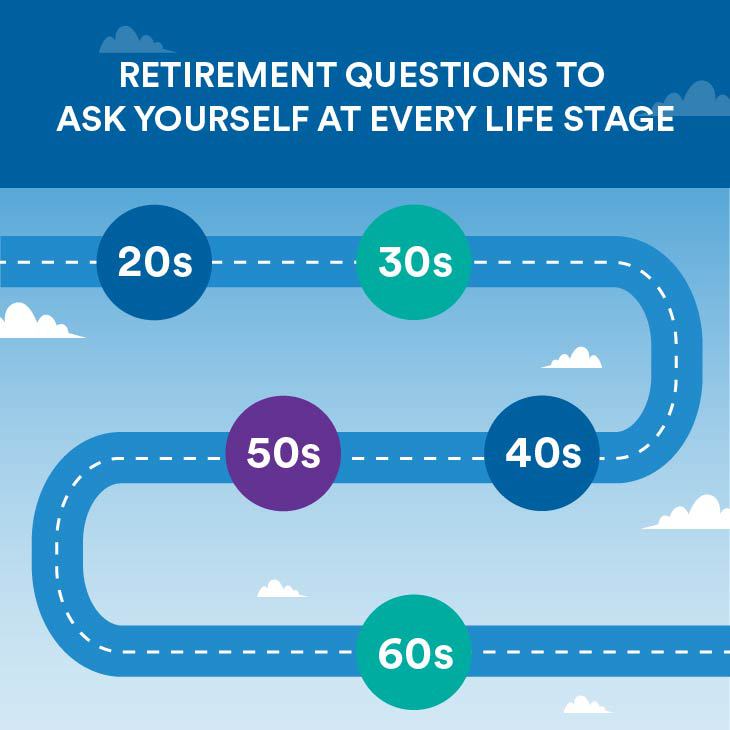
In your 20s
1. How do I make the most out of my employer offered retirement savings plan?
Putting at least the minimum amount into an employer-sponsored retirement plan to earn the match means you’re not leaving free money on the table.
2. Do I have a handle on my other monthly financial needs?
Many new graduates have to juggle multiple financial obligations, including student loans, rent, food, entertainment, and transportation needs. Make a monthly budget, so that you can properly factor in retirement savings while covering all your bases.
3. Can I afford to save even more?
If your expenses are low, it can be tempting to use extra money on entertainment, travel, or other fun things. But it’s important to prioritize saving, too: the earlier and the more funds you can put away in retirement the better, because your money has more time to grow. Be sure to also keep cash readily available in an emergency fund for any surprises that might pop up — experts recommend three to six months' worth of expenses.
4. Do I know my credit score, and what it implies?
A lot of your daily financial decisions — like paying your credit card bill on time, how much debt you have, and how many credit cards you have open — can impact your credit score, and your credit score is important for a number of reasons. People with scores in the excellent and good range are more likely to get better interest rates on loans and have access to more credit products, among other things. You can get your credit score for free from one of the three credit reporting agencies — Experian, TransUnion, and Equifax.
In your 30s
1. Is my emergency savings fully funded?
Emergencies can crop up at any time, and an expensive hospital or home repair bill can seriously set you back from other financial goals, like retirement savings. During your 30s, when you’re hopefully making a bit more in your career, is a great time to focus on keeping this account full. (Experts recommend keeping enough money to cover three to six months' worth of expenses.) Especially if have or are planning to have a family in the future, being covered in case of an emergency is essential.
2. Am I saving enough for my retirement goals?
Would you like to travel the world, spend half the year at your flat in London, or get a simple apartment close to your kids and grandkids? Other lifestyle choices — like entertainments and nights out — all factor into how much you might need as well.
3. Do I know what kind of legacy I want to leave?
Your retirement planning may or may not include your estate plan, including any money you want to leave for your kids or grandkids. If you have a family of your own now — or know you would like one — factor that into your retirement plans as well, and check your estate plan yearly to ensure it still meets all of your needs.
Also make sure you protect yourself in the present with adequate life and disability insurance, especially if you have a family.
In your 40s
1. Should I increase my retirement contributions?
If you’ve recently paid off some debt, like your student loans, or your kids are in college and you’re no longer saving for that goal, consider reallocating that money into retirement savings instead. If, however, you are still saving money in a fund for your child for college, make sure you aren’t saving for that goal at the expense of others, like your retirement. In other words: always continue to save for retirement, and never take money out of your 401(k) to fund your child’s education.
2. Should I consider opening a supplemental retirement account?
If you’re already meeting the match with any employer-sponsored plans, and you’ve reached the contribution limit for the accounts or want to invest in funds that are not offered in those accounts, opening a supplementary retirement account — like an IRA — may be a good idea. Be sure to assess how you are investing for reaching your retirement goals.
3. Have my career goals shifted at all, and if so, how might that impact my retirement?
By the time you’re in your 40s, you may be settled into your career or looking for a change in direction.
While people decide to change jobs for many reasons — including higher pay, better benefits, better work-life balance or to find a more fulfilling outlet — it’s important to consider what a move might mean in terms of your financial goals.
For example, you’ll want to understand what would happen with your current work-sponsored retirement account if you were to leave, whether or not you could be leaving a pension or stock options on the table, and what a potential decrease in salary could mean for your future goals.
In your 50s
1. Am I maxing out all of my retirement plans?
Catch-up contributions allow you to contribute even more to certain retirement plans — like IRAs — when you are 50 or older. Make sure you’re saving the maximum amount to reap the maximum rewards.
2. Do I need to reconsider my retirement and overall estate plans?
During your 50s is a good time to reevaluate the retirement intentions you set back when you were younger. Have your plans changed at all, and if so, how does that impact your retirement goals? Remember, it’s important prioritize saving for retirement, even if you have other expenses, like paying for college for your child.
At this stage it’s also very important to have a will and estate plan. Even with beneficiaries on your accounts, an estate plan that is properly executed is really the only way to ensure your assets go where you want them to.
3. Do you have healthcare figured out?
Healthcare costs can take a big chunk out of your retirement savings, even if you’re healthy; so it’s important to factor that in. According to Fidelity Investments, a 65-year old who retired in 2024 could spend $165,000 on healthcare during their retirement.1
In your 60s
1. Do I have enough saved to retire soon?
Depending on when you are planning to retire, you’ll need to check your current retirement funds to see if that’s a possibility, or if you need to save up a bit more before doing so. Since these are likely your highest-earning years, it also makes sense to ramp up your savings in general. It’s also a smart idea to consider changes like paying off any debt you have, or moving to a smaller home, if necessary.
If your funds are short, you might need to consider extending your retirement age, picking up a side job to pad your monthly retirement savings contributions or including some form of part-time work into your retirement years. Recheck your asset allocations at this point again to make sure you’re saving to your maximum benefit.
2. What changes can I make to retire comfortably and on time?
If retiring on time is important to you, perhaps there are some budgetary or lifestyle changes you can enact to help make that happen. For example, downsizing your home is a good way to potentially spend less every month on housing.
It’s also essential to make paying down debt a priority before retirement, if you haven’t already. In doing so, the money you have saved for retirement can be used entirely to fund your lifestyle, rather than paying down debt.
3. What are the different retirement incomes available to me when I retire?
There are various avenues for collecting money during retirement — including your retirement accounts, social security and Medicare — so it’s important to consider the positives and drawbacks of each. For example, taking all of your retirement account money as a lump sum – or proverbial “pot of gold” – may be tempting, but opting instead for a guaranteed stream of income can make planning and budgeting easier. A financial advisor can help walk you through the best course of action based on your specific needs.
Taking control of your personal financial health means keeping a well-rounded view of your money into the future, no matter your age or financial situation.